Written byAnju Mobin, B.ScNutritionist · B.Sc. Clinical Nutrition & DieteticsLast updatedProducts compared6 picks from 15 productsHow we review →
We may earn a commission when you buy through our links, at no extra cost to you. As an Amazon Associate we earn from qualifying purchases. How we make money
At a Glance
- Best Overall Sports Research Creatine Monohydrate with Creapure – 5 g of Creapure creatine, NSF Certified for Sport, nothing else added.Review ↓
- Best Tested Brand Thorne Creatine – NSF Certified for Sport, from a brand that describes four rounds of testing.Review ↓
- Best Single-Serve Packs Create Creatine Monohydrate Packs – pre-measured 5 g stick packs listed by NSF Certified for Sport.Review ↓
- Best Widely Available Optimum Nutrition Micronized Creatine – a single-ingredient 5 g scoop at a low cost per serving.Review ↓
- Best Value Nutricost Micronized Creatine Monohydrate – 200 servings of pure creatine in a 1 kg tub.Review ↓
- Best Capsules NAKED Creatine Capsules – no powder to mix; four capsules give 5 g.Review ↓
The Short Answer: The best creatine supplements are plain creatine monohydrate at 3–5 g a day, ideally with an independent certification such as NSF Certified for Sport12. Sports Research Creatine Monohydrate with Creapure is our top pick: one scoop gives 5 g of Creapure creatine with no other ingredients. If you want the same certification from a long-established testing brand, choose Thorne Creatine.
On this page
- Do You Actually Need a Creatine Supplement?
- Find Your Match
- How Much Creatine Is in Each Product?
- Creatine Supplements Compared
- The 6 Best Creatine Supplements, Reviewed
- Products We Didn’t Recommend
- Evidence Scorecard
- How to Take Creatine for Best Results
- What to Expect and When
- Safety, Side Effects & Drug Interactions
- Food First: Where Else to Get Creatine
- How to Choose a Creatine Supplement
- Frequently Asked Questions
- Final Verdict
Creatine is one of the most studied sports supplements. Taken daily alongside resistance training, it helps increase strength, power and lean mass, and it appears safe for healthy adults at normal doses12.
Almost every product on the shelf uses the same molecule, so the real differences are purity testing, form (powder, packs or capsules) and cost per serving. Newer forms such as creatine HCl cost more without better evidence2.
We compared 15 creatine products on form, dose per serving, independent testing, other ingredients and cost per serving. Every product is ranked by its BFN Score, a relative score within this guide. See our review process for how we score.
Do You Actually Need a Creatine Supplement?
Your body makes about 1 g of creatine a day, and a diet with meat or fish adds roughly another 1 g1. A supplement tops up muscle stores beyond what food usually provides.
Creatine may make sense if you:
- Do resistance training or sprint-type sports and want more strength and power from your training1.
- Are 50 or older and lift weights. Creatine combined with resistance training increased lean mass and strength in older adults4.
- Eat little or no meat or fish. Vegetarians tend to have lower muscle creatine and may respond more12.
It’s not useful for steady endurance performance, and it doesn’t build muscle without training1.
Who Should Skip It or Ask First
- People with kidney disease or reduced kidney function5.
- Anyone taking medicines that affect kidney function, such as regular NSAID use5.
- Anyone who is pregnant or breastfeeding, since safety data are limited.
- Teens: talk to a doctor first. See our guide to creatine for teenagers.
Find Your Match
| If you… | Consider | Why |
|---|---|---|
| Want the best overall powder | Sports Research with Creapure | Creapure + NSF Certified for Sport |
| Want a well-known testing brand | Thorne Creatine | NSF Certified for Sport, four-stage testing |
| Travel or train away from home | Create Single-Serve Packs | Pre-measured 5 g sticks |
| Want an easy-to-find name brand | Optimum Nutrition | Single ingredient, low cost per serving |
| Want the lowest cost per serving | Nutricost 1 kg | 200 servings per tub |
| Don’t want to mix a powder | NAKED Capsules | Capsules, no taste or texture |
| Have kidney disease | Talk to your doctor first | Not studied in kidney disease5 |
How Much Creatine Is in Each Product?
| Product | Labeled Serving | Creatine per Serving | Servings per Container | Servings for 5 g |
|---|---|---|---|---|
| Sports Research | 1 scoop | 5 g | 90 | 1 scoop |
| Thorne | 1 scoop | 5 g | About 90 | 1 scoop |
| Create | 1 stick pack | 5 g | 30 | 1 pack |
| Optimum Nutrition | 1 rounded scoop | 5 g | 120 | 1 scoop |
| Nutricost | 1 scoop | 5 g | 200 | 1 scoop |
| NAKED Capsules | 2 capsules | 2.5 g | 75 | 4 capsules |
Research uses 3–5 g a day for maintenance, or a short loading phase of about 20 g a day split into four doses for 5–7 days1.
Creatine Supplements Compared
Scroll sideways to see every column →
| # | Product | Form | Creatine per Serving | Other Ingredients | Independent Testing | Additives | Cost |
|---|---|---|---|---|---|---|---|
| 1 | Sports Research | Powder (Creapure) | 5 g | None | NSF Certified for Sport | Clean | $$$ |
| 2 | Thorne | Micronized powder | 5 g | None | NSF Certified for Sport | Clean | $$$ |
| 3 | Create | Stick packs | 5 g | None | NSF Certified for Sport | Clean | $$$ |
| 4 | Optimum Nutrition | Micronized powder | 5 g | None | Informed Choice (brand claim) | Clean | $$$ |
| 5 | Nutricost | Micronized powder | 5 g | None | Not stated | Clean | $$$ |
| 6 | NAKED Capsules | Capsules | 2.5 g | Hypromellose, magnesium stearate, water | Not stated for capsules | Clean | $$$ |
Cost per 5 g of creatine: $ = under $0.30, $$ = $0.30–0.45, $$$ = over $0.45. Checked November 2026; prices change often.
The 6 Best Creatine Supplements, Reviewed
#1Best Overall
1. Sports Research Creatine Monohydrate with Creapure

BFN Score9.6/10
$$$Mid-range90 servings1 scoop per serving
Strongest atQuality & trustWeakest atValue & practicality
Sports Research gives 5 g of Creapure creatine monohydrate per scoop with no other ingredients. It is listed by NSF Certified for Sport and costs less per serving than the other certified powders on our list.
Label Reality Check
- Active ingredient + form
- creatine monohydrate (Creapure)
- Dose per serving
- 1 scoop (5 g)
- Dose vs. research
- Within studied range; 3–5 g a day is the standard maintenance dose1
- % DV / Upper Limit
- No DV or UL
- Purity testing
- NSF Certified for Sport (listed in the NSF database, November 2026)
- Other ingredients
- none
- Additives
- Clean
- Allergens & diet
- certified vegan and gluten-free, Non-GMO Project Verified
Clinical Relevance
Creapure is creatine monohydrate made by one German manufacturer under its own quality controls. It isn’t more effective than other pure monohydrate, but it gives a consistent, traceable source.
Strengths
- Creapure plus NSF Certified for Sport
- Single ingredient
- Lower cost than other certified powders
Limitations
- Costs more than budget tubs
- Only 90 servings
- Doesn’t dissolve fully in cold water for some users
Practical Details
Take 1 scoop a day in water, coffee, juice or a shake. Timing matters less than taking it every day.
Best For / Not For
Best formost adults who want a certified, pure creatine.
Not forpeople who want the lowest possible cost.
Buyer Experience
Most buyers say it has no taste, mixes smoothly into drinks and shakes, and helps their workouts and recovery. Many consider it good value for the quality.
Some find it doesn’t fully dissolve, and a minority report bloating or loose stools.
vs. Thorne Creatine
Choose Sports Research for Creapure at a lower cost per serving. Choose Thorne for a brand that describes four rounds of testing.
Nutritionist’s Note
Stomach upset usually comes from large single doses; split the dose or take it with a meal.
Verdict: A pure, certified creatine at a fair price.
#2Best Tested Brand
2. Thorne Creatine

BFN Score9.5/10
$$$PremiumAbout 90 servings1 scoop per serving
Strongest atQuality & trustWeakest atValue & practicality
Thorne gives 5 g of micronized creatine monohydrate per scoop with nothing else. It is listed by NSF Certified for Sport, and the brand describes four rounds of testing, from raw materials to stability.
Label Reality Check
- Active ingredient + form
- creatine monohydrate (micronized)
- Dose per serving
- 1 scoop (5 g)
- Dose vs. research
- Within studied range1
- % DV / Upper Limit
- No DV or UL
- Purity testing
- NSF Certified for Sport (listed in the NSF database, November 2026)
- Other ingredients
- none
- Additives
- Clean
- Allergens & diet
- made without dairy, soy and gluten (brand statement)
Clinical Relevance
Micronized creatine has smaller particles, which helps it mix. It works the same way in the body as standard monohydrate.
Strengths
- NSF Certified for Sport
- Single ingredient
- Dissolves well in warm drinks
Limitations
- Higher cost per serving
- Texture complaints from some buyers
- Scoop can sink into the powder
Practical Details
Take 1 scoop a day; it mixes easily into coffee or a shake.
Best For / Not For
Best fortested athletes and anyone who wants a long-established testing brand.
Not forbudget buyers.
Buyer Experience
Many buyers say it dissolves well, has no taste and helps their strength and recovery. They often mention trusting the brand’s testing.
Opinions on value are split, and some find the texture gritty or report nausea.
vs. Sports Research with Creapure
Choose Thorne for its testing process and wide trust among athletes. Choose Sports Research for Creapure at a lower cost.
Nutritionist’s Note
If you’re drug tested, look up the exact product in the NSF Certified for Sport database before each new purchase.
Verdict: A trusted, certified creatine for people who don’t mind paying more.
#3Best Single-Serve Packs
3. Create Creatine Monohydrate Single-Serve Packs
BFN Score9.3/10
$$$Premium30 servings1 stick pack per serving
Strongest atPurity & additivesWeakest atValue & practicality
Create puts 5 g of creatine monohydrate in each stick pack with no other ingredients. The unflavored product is listed by NSF Certified for Sport, and the brand states it uses Creapure.
Label Reality Check
- Active ingredient + form
- creatine monohydrate (Creapure, brand statement)
- Dose per serving
- 1 stick pack (5 g)
- Dose vs. research
- Within studied range1
- % DV / Upper Limit
- No DV or UL
- Purity testing
- NSF Certified for Sport (listed as “Create Wellness Unflavored,” November 2026)
- Other ingredients
- none
- Additives
- Clean
- Allergens & diet
- free of gluten, soy, dairy and nuts (brand statement)
Clinical Relevance
A pre-measured pack removes dosing guesswork. Daily consistency matters more than timing2.
Strengths
- No measuring
- NSF Certified for Sport
- Easy to carry
Limitations
- Highest cost per serving on our list
- Only 30 servings
- Smaller review base
Practical Details
Empty 1 pack into any drink once a day.
Best For / Not For
Best fortravelers and people who forget daily doses.
Not foranyone on a tight budget.
Buyer Experience
The review base is small. Buyers like the convenience for travel and say it’s easy to take every day, and several mention clearer thinking.
Taste and mixing are split: some find it tasteless, while others notice a flavor or say it settles unless stirred.
vs. Thorne Creatine
Choose Create for single-serve packs. Choose Thorne for a lower cost per serving from a tub.
Nutritionist’s Note
Packs cost more per gram; some people keep a tub at home and packs for travel.
Verdict: The easiest way to take certified creatine on the go.
#4Best Widely Available
4. Optimum Nutrition Micronized Creatine

BFN Score9.2/10
$$$Budget120 servings1 rounded scoop per serving
Strongest atValue & practicalityWeakest atQuality & trust
Optimum Nutrition gives 5 g of micronized creatine monohydrate per scoop with no other ingredients, at one of the lowest costs per serving on our list.
Label Reality Check
- Active ingredient + form
- creatine monohydrate (micronized)
- Dose per serving
- 1 rounded scoop (5 g)
- Dose vs. research
- Within studied range1
- % DV / Upper Limit
- No DV or UL
- Purity testing
- Informed Choice (brand claim; the label says “banned substance tested” without naming the program)
- Other ingredients
- none
- Additives
- Clean
- Allergens & diet
- not stated
Clinical Relevance
A plain monohydrate at a low cost is all most people need. The main trade-off is texture, not effectiveness.
Strengths
- Low cost per serving
- Single ingredient
- Very large review base
Limitations
- Many buyers find it gritty
- Testing program not named on the label
- Some tubs arrive without a scoop
Practical Details
Mix 1 rounded scoop into a shake; it blends better in shakes than in plain water.
Best For / Not For
Best forbudget buyers who want a familiar brand.
Not fordrug-tested athletes who need a verified certification.
Buyer Experience
Most buyers call it a reliable, good-value creatine with no strong taste, and many report better recovery and strength.
Dissolving and texture are the main complaints: many find it gritty or sandy in water.
vs. Nutricost Creatine
Choose Optimum Nutrition for a well-known brand with a testing claim. Choose Nutricost for more servings per tub.
Nutritionist’s Note
If grit bothers you, mix it into a protein shake or yogurt instead of water.
Verdict: Simple, low-cost creatine from a familiar brand.
#5Best Value
5. Nutricost Micronized Creatine Monohydrate

BFN Score9.1/10
$$$Budget200 servings1 scoop per serving
Strongest atValue & practicalityWeakest atQuality & trust
Nutricost gives 5 g of micronized creatine monohydrate per scoop and 200 servings per tub, the lowest cost per serving on our list.
Label Reality Check
- Active ingredient + form
- creatine monohydrate (micronized)
- Dose per serving
- 1 scoop (5 g)
- Dose vs. research
- Within studied range1
- % DV / Upper Limit
- No DV or UL
- Purity testing
- Not stated (the brand says third-party tested, without naming the lab)
- Other ingredients
- none
- Additives
- Clean
- Allergens & diet
- vegetarian, gluten-free, non-GMO
Clinical Relevance
At 200 servings, one tub lasts more than six months at 5 g a day, which suits long-term use.
Strengths
- Lowest cost per serving
- 200 servings
- Single ingredient
Limitations
- No named certification
- Texture and taste split opinions
- Stomach upset for some
Practical Details
Take 1 scoop a day; split it into two doses if it upsets your stomach.
Best For / Not For
Best forlong-term daily users on a budget.
Not forathletes who need a certified product.
Buyer Experience
Many buyers say it’s good quality, delivers steady results for strength and muscle, and is great value for the size.
Taste, dissolving and texture are split, and a sizable group report nausea or stomach upset.
vs. Optimum Nutrition
Choose Nutricost for the most servings per tub. Choose Optimum Nutrition for a named testing claim.
Nutritionist’s Note
Creatine raises the creatinine number on blood tests without harming the kidneys; tell your doctor you take it2.
Verdict: The best value for everyday creatine.
#6Best Capsules
6. NAKED Creatine Capsules
BFN Score8.2/10
$$$Premium75 servings (about 37 days at 5 g)2 capsules per serving
Strongest atEvidence fitWeakest atValue & practicality
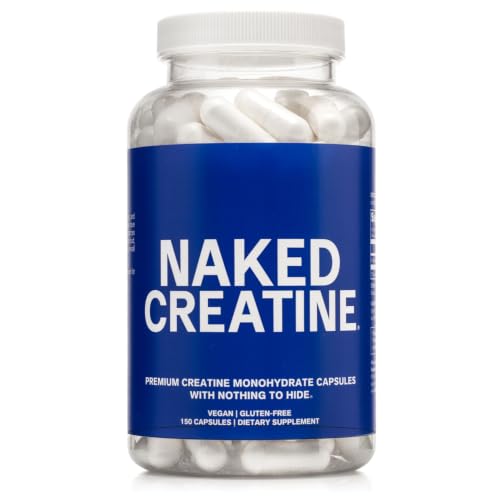
NAKED capsules give 2.5 g of creatine monohydrate per two capsules, so you need four capsules for the usual 5 g. It’s an option if you don’t want to mix a powder.
Label Reality Check
- Active ingredient + form
- creatine monohydrate (micronized)
- Dose per serving
- 2 capsules (2.5 g)
- Dose vs. research
- Below the usual 5 g per labeled serving; 4 capsules reach the studied dose1
- % DV / Upper Limit
- No DV or UL
- Purity testing
- Not stated for capsules (NAKED’s creatine powder is NSF/ANSI 173 certified; the capsules weren’t listed in November 2026)
- Other ingredients
- hypromellose capsule, magnesium stearate, water
- Additives
- Clean
- Allergens & diet
- vegan
Clinical Relevance
Capsules work the same as powder once swallowed. The labeled serving gives half the usual dose, so check how many capsules you need.
Strengths
- No mixing or taste
- Vegan capsule
- Short ingredient list
Limitations
- Four capsules for 5 g
- Second-highest cost per gram
- Certification covers the powder, not these capsules
Practical Details
Take 4 capsules a day with water, all at once or split across meals.
Best For / Not For
Best forpeople who dislike powders.
Not foranyone who wants the lowest cost or a certified capsule.
Buyer Experience
The reviews we found are shared with NAKED’s creatine powder, so they mostly describe the powder rather than the capsules. Buyers praise the brand’s purity and value.
A sizable group mention stomach side effects, and capsule-specific feedback is limited so far.
vs. Nutricost Creatine
Choose NAKED capsules if you won’t use a powder. Choose Nutricost for the same creatine at a fraction of the cost.
Nutritionist’s Note
If you need a certified product for sport, choose a listed powder instead of capsules.
Verdict: A convenient capsule option, at a higher cost per gram.
Products We Didn’t Recommend
Momentous Creatine. NSF Certified for Sport and well made, but it costs as much as Thorne, and its current label no longer lists Creapure, so it offered no clear advantage over our top two picks.
Klean Athlete and Designs for Sport creatine. Both are NSF Certified for Sport, but they cost more per serving than our certified picks.
Creatine gummies. Most add sugar, and few have an independent certification that confirms the creatine amount. If you prefer them, see our guide to creatine gummies for women.
Creatine HCl and buffered creatine (Kre-Alkalyn). More expensive, with no evidence they work better than monohydrate2. See creatine HCl vs. monohydrate.
“Creatine +” blends with electrolytes, stimulants or other add-ins. The extra ingredients make it harder to know your dose and aren’t needed for creatine to work.
Evidence Scorecard
| Use | What it’s studied for | Evidence level | Notes |
|---|---|---|---|
| Strength and power | Gains with resistance training | Strong | Consistent benefit across many trials1 |
| Lean mass in older adults | Muscle with resistance training | Moderate | Greater lean mass and strength than training alone4 |
| Brain function | Memory and reasoning | Limited | Some benefit, mainly in older or stressed people3 |
| Endurance | Long, steady exercise | Not supported | Little effect on aerobic performance1 |
| Safety in healthy adults | Kidney and liver markers | Strong | No harm at normal doses in studies up to several years12 |
How to Take Creatine for Best Results
| Step | What to do | Why |
|---|---|---|
| Daily dose | 3–5 g a day | Fills muscle stores in about 3–4 weeks1 |
| Optional loading | About 20 g a day in 4 doses for 5–7 days, then 3–5 g | Fills stores faster1 |
| Timing | Any time of day, every day | Consistency matters more than timing2 |
| With food | With a meal or a carb-containing drink if it upsets your stomach | Gentler on digestion |
| Fluids | Drink normally | Early weight gain is mostly water inside muscle2 |
- Don’t double up after a missed day; just continue.
- Expect 1–2 kg of early weight gain if you load; it’s water stored in muscle2.
- Stop and see a doctor if you notice swelling, reduced urination or unusual fatigue.
What to Expect and When
With 3–5 g a day, muscle creatine is usually full after about 3–4 weeks; with loading, after about a week1. Strength gains build over the following weeks of training.
Safety, Side Effects & Drug Interactions
The most common side effects are stomach upset, bloating, weight gain from water and muscle cramps, mostly with large single doses5. Research doesn’t support claims that creatine causes hair loss, dehydration or kidney damage in healthy people2.
| Medication or condition | Possible interaction | What to do |
|---|---|---|
| Kidney disease | Not studied; may add strain5 | Don’t use without your doctor |
| NSAIDs and other medicines that affect the kidneys | Possible added kidney risk5 | Ask your doctor first |
| Blood or urine creatinine tests | Creatine raises creatinine readings2 | Tell your doctor you take it |
| Caffeine | May reduce creatine’s benefit in some studies5 | Moderate amounts are fine for most people |
| Pregnancy or breastfeeding | Limited safety data | Avoid unless your doctor advises |
| Teens | Limited data | Ask a doctor first |
Food First: Where Else to Get Creatine
| Food | Creatine (approx.) |
|---|---|
| Herring | About 0.7–1 g per 100 g raw |
| Pork and beef | About 0.5 g per 100 g raw |
| Salmon and tuna | About 0.4–0.5 g per 100 g raw |
| Chicken | About 0.3–0.4 g per 100 g raw |
| Dairy and eggs | Trace amounts |
Cooking lowers creatine content. Reaching 5 g from food alone would take about 1 kg of raw meat or fish a day. See our full list of foods high in creatine.
How to Choose a Creatine Supplement
Creatine Monohydrate
Choose monohydrate. It has the most research and costs the least per gram12.
Independent Certification
Look for NSF Certified for Sport or Informed Sport, and check the exact product in the certifier’s database. “Third-party tested” without a named program isn’t the same.
Single Ingredient
Unflavored creatine with no added ingredients is the simplest to dose.
Form
Powder is cheapest. Packs and capsules cost more but are easier for some people.
Cost per 5 g
Compare cost per 5 g serving, not per tub.
Label Red Flags
- Creatine inside a proprietary blend without an amount
- Claims of “no loading needed” for special forms that cost more
- Gummies without independent testing
- “NSF Certified” on a product that isn’t in the NSF database
Important: These supplements are not intended to diagnose, treat, cure, or prevent any disease. Results vary by individual. If you have a health condition or take medications, check with your doctor before adding any new supplement to your routine.
Frequently Asked Questions
What is the best creatine supplement?
Sports Research Creatine Monohydrate with Creapure is our top pick for its Creapure source and NSF Certified for Sport listing. For a well-established testing brand, choose Thorne; for the lowest cost, Nutricost.
Is creatine monohydrate the best form?
Yes. It’s the most studied and least expensive form, and no other form has been shown to work better2.
How much creatine should I take a day?
Most adults take 3–5 g a day. A loading phase of about 20 g a day for 5–7 days is optional1.
Do I need to cycle creatine?
No. Studies support continuous daily use; there’s no need to take breaks2.
Does creatine cause hair loss?
There’s no good evidence that it does. One small study found a rise in DHT, but it hasn’t been repeated, and no study has shown hair loss2.
Final Verdict
Sports Research Creatine Monohydrate with Creapure is the best creatine supplement for most people: pure Creapure monohydrate, NSF Certified for Sport, at a fair cost.
For a long-trusted testing brand, choose Thorne. For the lowest cost per serving, choose Nutricost; for travel, Create packs.
Take 3–5 g every day, pair it with training, and talk to your doctor first if you have kidney concerns. For capsule options, see our guide to creatine capsules; for food sources, see foods high in creatine.
Sources & History
References
- International Society of Sports Nutrition Position Stand: Safety and Efficacy of Creatine Supplementation in Exercise, Sport, and Medicine — Journal of the International Society of Sports Nutrition, 2017
- Common Questions and Misconceptions About Creatine Supplementation: What Does the Scientific Evidence Really Show? — Journal of the International Society of Sports Nutrition, 2021
- Effects of Creatine Supplementation on Cognitive Function of Healthy Individuals: A Systematic Review of Randomized Controlled Trials — Experimental Gerontology, 2018
- Effect of Creatine Supplementation During Resistance Training on Lean Tissue Mass and Muscular Strength in Older Adults: A Meta-Analysis — Open Access Journal of Sports Medicine, 2017
- Creatine — MSD Manual Consumer Version
Update history
- Rebuilt with BFN Score v3: compared 15 creatine labels and ranked six monohydrate products by testing, form, dose, other ingredients and cost per serving; checked NSF certifications in the NSF database; removed fixed prices and products without current offers; added dose, evidence, safety and food tables.