
 Written byAnju Mobin, B.ScNutritionist · B.Sc. Clinical Nutrition & DieteticsLast updatedProducts compared4 picks from 17 productsHow we review →
We may earn a commission when you buy through our links, at no extra cost to you. As an Amazon Associate we earn from qualifying purchases. How we make money
At a Glance
- Best Overall Triquetra SaffronRX Kids – Organic Saffr’Activ stigma extract in drops, with separate doses for ages 3–6 (15 mg) and 7–17 (30 mg) and no other active ingredients.Review ↓
- Best for Teens 12+ Vinatura Organic Saffron – 28 mg of affron, the extract and daily amount tested in teens aged 12 to 16.Review ↓
- Best Gummy Oneoo Saffron Gummies – A sugar-free gummy with 14 mg (ages 4–8) or 28 mg (ages 9+) of standardized stigma extract.Review ↓
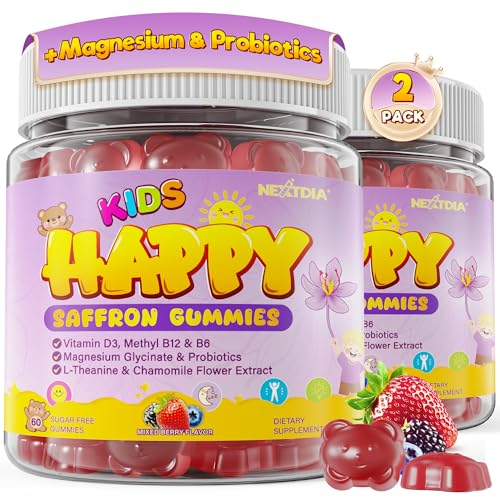
- Best for Bedtime Nextdia Happy Saffron Gummies – 15 or 30 mg of saffron with magnesium and chamomile; buyers often say it makes kids sleepy.Review ↓
The Short Answer: Talk to your child’s pediatrician before giving saffron, especially if your child takes ADHD or other medicine. In children’s studies, saffron was given at 20 to 30 mg a day to ages 6 to 17, depending on weight12, and teens aged 12 to 16 took 28 mg a day3. Our top pick is Triquetra SaffronRX Kids: it contains only organic Saffr’Activ, the extract used in a study of children with ADHD2, with dosing by age on the label. For teens who can swallow capsules, Vinatura Organic Saffron gives the same extract and daily amount used in the teen trial3. Many kids’ saffron gummies add St. John’s wort, L-tryptophan or 10 or more other ingredients, and we left those out.
On this page
- Does Your Child Need a Saffron Supplement?
- Find Your Match
- Saffron Supplements for Kids Compared
- The 4 Best Saffron Supplements for Kids, Reviewed
- Products We Didn’t Recommend
- Evidence Scorecard
- Saffron Doses Studied in Children and Teens
- Safety, Side Effects & Drug Interactions
- How to Choose a Saffron Supplement for Kids
- Frequently Asked Questions
- Final Verdict
We compared the labels of 17 saffron products sold for children and teens, and checked each one’s extract, plant part, dose by age and added ingredients against the children’s research. Each product gets a BFN Score relative to the others in this guide. Our review process explains how we score.
Does Your Child Need a Saffron Supplement?
Most children do not. Saffron is not a nutrient, and there is no recommended intake for children. The amounts in cooking are far below the doses used in studies.
Parents usually look at saffron for three reasons:
- ADHD symptoms: in a 6-week randomized trial of 54 children aged 6 to 17, saffron (20 or 30 mg a day by weight) and methylphenidate improved parent and teacher ADHD ratings by similar amounts1. There was no placebo group, and the trial was small.
- Low mood or worry in teens: in 68 teens aged 12 to 16, affron 14 mg twice a day for 8 weeks improved the teens’ own ratings of anxiety and depressive symptoms more than placebo; parents’ ratings did not differ clearly3.
- Sleep and big feelings: these are the most common reasons buyers give, but we found no trial of saffron for sleep or tantrums in young children.
Set expectations: the children’s evidence comes from a handful of small studies, and none were long term. Saffron is not a treatment for ADHD, anxiety or depression, and it should not replace your child’s medicine or therapy.
Who Should Skip It (or Ask First)
- Children under 6: we found no published studies in this age group
- Children taking ADHD medicine, antidepressants or other psychiatric medicine: ask the prescriber first, and do not stop or change medicine on your own
- Children taking blood pressure medicine or blood thinners: high doses of saffron lowered blood pressure and platelets in adults6
- Children with a diagnosed mood or anxiety disorder: these need a care plan, not a supplement alone
Find Your Match
| If your child… | Consider | Why |
|---|---|---|
| Is 3 to 17 and you want saffron alone | Triquetra SaffronRX Kids | Saffr’Activ, dosing by age |
| Is a teen who swallows capsules | Vinatura | affron 28 mg, the teen trial dose |
| Will only take a gummy | Oneoo | 14 or 28 mg stigma extract, sugar-free |
| Struggles to settle at bedtime | Nextdia Happy Saffron | Saffron, magnesium and chamomile; taken at night |
Saffron Supplements for Kids Compared
Scroll sideways to see every column →
| # | Product | Form | Extract & Plant Part | Dose by Age | Other Actives | Testing | Cost |
|---|---|---|---|---|---|---|---|
| 1 | Triquetra SaffronRX Kids | Drops | Saffr’Activ (stigma), organic | 15 mg (3–6), 30 mg (7–17) | None | “Heavy metal tested” (brand) | $$$ |
| 2 | Vinatura | Capsule | affron (stigma), organic | 28 mg (adult label) | None | “3rd party tested” (brand); COA on brand site | $$$ |
| 3 | Oneoo | Gummy | Stigma extract, 3.5% Lepticrosalides | 14 mg (4–8), 28 mg (9+) | Magnesium, L-theanine, lemon balm, chamomile, vitamins | GMP (brand) | $$$ |
| 4 | Nextdia Happy Saffron | Gummy | Extract (stigma and flower), 0.3% safranal | 15 mg (4–8), 30 mg (9+) | Magnesium, L-theanine, chamomile, vitamin D3, probiotics | Not stated | $$$ |
Cost tiers per day at the dose for older children: $ under $0.60 · $$ $0.60–$1.20 · $$$ over $1.20 (checked November 2026).
The 4 Best Saffron Supplements for Kids, Reviewed
#1Best Overall
1. Triquetra SaffronRX Kids

BFN Score9.6/10
$$$Mid-range30 to 60 servings0.5 to 1 mL per serving
Strongest atDose & safetyWeakest atValue & practicality
Triquetra uses organic Saffr’Activ, a saffron stigma extract, in berry-flavored glycerin drops, with a 15 mg dose for ages 3 to 6 and 30 mg for ages 7 to 17. It contains no other active ingredients.
Label Reality Check
- Active ingredient + form
- Organic saffron extract (Crocus sativus, stigma) as Saffr’Activ
- Dose per serving
- 15 mg (15 drops, ages 3–6) or 30 mg (30 drops, ages 7–17)
- Dose vs. research
- 30 mg a day of Saffr’Activ was used in children aged 7 to 17 with ADHD2; we found no studies in children under 6
- % DV / Upper Limit
- No DV or upper limit for saffron
- Purity testing
- USDA Organic; “heavy metal tested” (brand claim, lab not named)
- Other ingredients
- Organic vegetable glycerin, water, organic berry flavor (organic acacia gum, natural flavors, citric acid)
- Additives
- Clean; no added sugar
- Allergens & diet
- Vegan
- Safety flags
- Label covers ages 3–6, but saffron has not been studied under age 6
Clinical Relevance
In a 3-month study in Spain, 32 children and teens aged 7 to 17 with ADHD took 30 mg of Saffr’Activ each evening. Their ADHD ratings improved by about as much as those of 24 children on methylphenidate, with similar rates of side effects. Families chose the treatment, and there was no placebo group2.
Strengths
- Saffron is the only active ingredient
- Separate doses for younger and older children
- Same extract used in a children’s study
Limitations
- Costs more per day than Vinatura
- Herbal taste
- Smaller buyer base
Practical Details
Give the dose for your child’s age once a day, by mouth or mixed into a drink. In the children’s study, the dose was taken in the evening2.
Best For / Not For
Best forparents who want saffron without other herbs or vitamins.
Not forchildren under 6, unless a pediatrician advises it.
Buyer Experience
Parents report fewer tantrums and better focus.
Opinions on the taste are mixed, and some mix the drops into juice.
vs. Oneoo Saffron Gummies
Choose Triquetra for saffron alone with dosing down to small amounts. Choose Oneoo if your child will only take a gummy.
Nutritionist’s Note
Drops make it easy to start below the label dose. If your pediatrician agrees, use a measured dose and keep a simple diary of mood, focus and sleep for four weeks.
Verdict: The simplest saffron product for children, with the extract used in a children’s study.
#2Best for Teens 12+
2. Vinatura Organic Saffron

BFN Score9.2/10
$$$Budget45 servings1 capsule per serving
Strongest atEvidence fitWeakest atDose & safety
Vinatura gives 28 mg of organic affron, a stigma extract standardized to 3.5% Lepticrosalides, in one capsule. That is the same extract and daily amount used in a placebo-controlled trial in teens.
Label Reality Check
- Active ingredient + form
- Organic saffron stigma extract (Crocus sativus) as affron, 3.5% Lepticrosalides
- Dose per serving
- 28 mg
- Dose vs. research
- Matches the 28 mg a day (14 mg twice daily) used in teens aged 12 to 163
- % DV / Upper Limit
- No DV or upper limit for saffron
- Purity testing
- “3rd party tested” badge; certificate of analysis on the brand’s website
- Other ingredients
- Vegetable cellulose capsule, organic rice flour
- Additives
- Clean
- Allergens & diet
- Vegan
- Safety flags
- Labeled for adults, with no directions for children
Clinical Relevance
In 68 teens aged 12 to 16 with mild to moderate anxiety or low mood, affron 14 mg twice a day for 8 weeks improved the teens’ own ratings of anxiety, social fears and depressive symptoms more than placebo. Parents’ ratings did not change consistently, and the treatment was well tolerated3.
Strengths
- Trial-matched extract and dose for teens
- Saffron is the only active ingredient
- Lowest cost per day at the older-child dose
Limitations
- Not labeled for children
- Capsule only
- Mixed side-effect reports
Practical Details
Use only with a pediatrician’s approval. In the teen trial, the daily amount was split into two 14 mg doses3; one capsule gives the same total.
Best For / Not For
Best forteens 12 and older who can swallow capsules and whose doctor approves.
Not foryounger children.
Buyer Experience
Buyers say it works and helps them feel calm and relaxed.
Side-effect reports are mixed, and a few say their mood got worse.
vs. Triquetra SaffronRX Kids
Choose Vinatura for a teen who prefers capsules, at a lower cost. Choose Triquetra for a product labeled and dosed for children.
Nutritionist’s Note
Ask your teen how they feel, not just how they seem. In the teen trial, the teens noticed changes that their parents did not3.
Verdict: The closest match to the teen saffron trial, for older children with a doctor’s OK.
#3Best Gummy
3. Oneoo Saffron Gummies

BFN Score8.8/10
$$$Mid-range30 to 60 servings1 to 2 gummies per serving
Strongest atDose & safetyWeakest atQuality & testing
Oneoo gives 14 mg of saffron stigma extract, standardized to 3.5% Lepticrosalides, per gummy, with one gummy for ages 4 to 8 and two for ages 9 and up. It adds magnesium, L-theanine, lemon balm, chamomile and several vitamins at modest amounts.
Label Reality Check
- Active ingredient + form
- Saffron stigma extract (Crocus sativus), 3.5% Lepticrosalides
- Dose per serving
- 14 mg (1 gummy, ages 4–8) or 28 mg (2 gummies, ages 9+)
- Dose vs. research
- 28 mg matches the teen trial dose3 and falls within the 20–30 mg used in children aged 6 to 171; the extract is not named
- % DV / Upper Limit
- Vitamin D3 10–20 mcg, below the upper limit for each age8; magnesium 50–100 mg from magnesium bisglycinate
- Purity testing
- GMP facility (brand claim); no independent lab named
- Other ingredients
- Soluble tapioca fiber, water, pectin, vegetable glycerin, natural berry flavor, citric acid, sodium citrate, black carrot and beetroot juice (color), malic acid, stevia, monk fruit extract, coconut oil, carnauba wax
- Additives
- Clean; sweetened with stevia and monk fruit
- Allergens & diet
- Vegan, gluten-free; contains coconut oil
- Safety flags
- Also contains L-theanine 50–100 mg, lemon balm 50–100 mg and chamomile 25–50 mg
Clinical Relevance
The 28 mg dose for ages 9 and up matches the daily amount of a standardized stigma extract that improved teens’ self-rated anxiety and mood3. The other ingredients have not been tested together in children.
Strengths
- Sugar-free gummy
- Dosing by age
- Standardized stigma extract
Limitations
- Several added ingredients
- Testing lab not named
- Newer product, smaller buyer base
Practical Details
Give one gummy (ages 4–8) or two gummies (ages 9+) a day, as the label directs.
Best For / Not For
Best forchildren who will only take a gummy.
Not forchildren allergic to coconut or chamomile.
Buyer Experience
Parents like the taste and quality, and many say their children sleep better and feel more rested.
vs. Nextdia Happy Saffron Gummies
Choose Oneoo for a stigma-only extract with a stated standardization. Choose Nextdia if your child needs help settling at night.
Nutritionist’s Note
Chamomile is in the daisy family. If your child has a ragweed or daisy allergy, check with your pediatrician first.
Verdict: A sugar-free gummy with a trial-range saffron dose for older children.
#4Best for Bedtime
4. Nextdia Happy Saffron Gummies
BFN Score8.2/10
$$$Premium30 to 60 servings1 to 2 gummies per serving
Strongest atDose & safetyWeakest atQuality & testing
Nextdia gives 15 mg of saffron extract, standardized to 0.3% safranal, per gummy, with one gummy for ages 4 to 8 and two for ages 9 and up. It adds magnesium glycinate, L-theanine, chamomile, vitamins D3, B6 and B12, and a probiotic blend.
Label Reality Check
- Active ingredient + form
- Saffron extract (Crocus sativus, stigma and flower), 0.3% safranal
- Dose per serving
- 15 mg (1 gummy, ages 4–8) or 30 mg (2 gummies, ages 9+)
- Dose vs. research
- Within the 20–30 mg range used in children aged 6 to 171, but this extract includes the flower and has not been tested
- % DV / Upper Limit
- Vitamin D3 25 mcg (ages 4–8) or 50 mcg (ages 9+), below the upper limits of 75 and 100 mcg8
- Purity testing
- Not stated on the listing images we checked
- Other ingredients
- Not shown on the listing images we checked
- Additives
- Not assessed; 0 g sugar
- Allergens & diet
- Not assessed
- Safety flags
- Count vitamin D from any other supplement your child takes8
Clinical Relevance
The extract in this product has not been studied in children. Its 30 mg dose for older children is in the range used in the ADHD trial1, but that trial used a different saffron product.
Strengths
- Dosing by age
- Sugar-free
- No melatonin
Limitations
- Includes flower, not stigma alone
- Testing not stated
- Highest cost per day
Practical Details
Give one gummy (ages 4–8) or two gummies (ages 9+) a day. Buyers often find it makes children sleepy, so evening use is the safer choice.
Best For / Not For
Best forchildren who have trouble settling at night.
Not forchildren who already take a vitamin D supplement, unless the total is checked.
Buyer Experience
Parents like the taste and report better sleep and a calmer, less overstimulated mood.
Results are mixed for some, and several say it makes children very sleepy.
vs. Oneoo Saffron Gummies
Choose Nextdia for a bedtime routine. Choose Oneoo for a stigma-only extract.
Nutritionist’s Note
If a gummy makes your child drowsy, give it after dinner and never before school, sports or swimming.
Verdict: A bedtime gummy with a modest saffron dose, but a less clearly defined extract.
Products We Didn’t Recommend
- JoySpring Mood Munchies Saffron Gummies and Mood Magic Powder Sticks: both add St. John’s wort, and the powder sticks also add L-tryptophan. St. John’s wort interacts with many medicines10, which is a concern in a children’s product.
- Two other kids’ saffron drops and gummies with L-tryptophan: they add L-tryptophan, another ingredient that acts on serotonin, to saffron.
- Saphire Happy Chews Saffron Gummies: each gummy lists “44.25 mg” of saffron made from 4.4 mg of a 10:1 extract, plus 0.5 to 1 mg of magnesium, GABA and L-theanine, amounts too small to matter.
- GOJOY Naturals Kids Focus Gummies: contain iron. Accidental iron overdose is a leading cause of fatal poisoning in children under 6, and iron products carry a warning for this reason9.
- I’m Nutrients Calm Mind: a simple formula (affron with magnesium, zinc and B6), but low buyer ratings, with frequent complaints about the taste.
Products We Considered
- Welvigor Saffron Kids Gummies and Bloomwise Kids Magnesium Glycinate & Saffron: multi-ingredient blends that add lion’s mane, phosphatidylserine, alpha-GPC or taurine.
- Liposomal kids’ saffron drops (GZ Haoyuan, HFeliz, Natisland): multi-ingredient blends of saffron with L-theanine, magnesium, omega-3 or herbs.
- Wild & Organic Saffron Drops and Drops of Nature Saffron Extract: liquid saffron, but at an 88.5 mg adult dose or as a flower extract.
If your child has ADHD, see our guide to omega-3 supplements for kids with ADHD. For adult saffron products, see our best saffron supplements guide.
Evidence Scorecard
| Use in children or teens | What the research shows | Evidence level |
|---|---|---|
| ADHD symptoms (ages 6–17) | 20–30 mg a day improved ADHD ratings about as much as methylphenidate over 6 weeks; no placebo group1 | Limited (one small trial) |
| ADHD symptoms (ages 7–17) | 30 mg of Saffr’Activ a day for 3 months gave changes similar to methylphenidate; not randomized2 | Limited (observational) |
| Anxiety and low mood (ages 12–16) | affron 28 mg a day improved teens’ self-rated symptoms vs. placebo over 8 weeks; parents’ ratings were inconsistent3 | Limited (one trial) |
| Sleep in children | Time to fall asleep did not differ significantly from methylphenidate in the Saffr’Activ study2 | Insufficient |
| Children under 6 | No published studies found | None |
In adults, saffron has more than 20 small trials for mood and anxiety4, but adult results do not tell us the right dose or long-term safety for children.
Saffron Doses Studied in Children and Teens
| Age | Amount studied | Extract | Study |
|---|---|---|---|
| 6–17, under 30 kg | 20 mg a day | Saffron capsules | 6-week trial1 |
| 6–17, 30 kg or more | 30 mg a day | Saffron capsules | 6-week trial1 |
| 7–17 | 30 mg a day, in the evening | Saffr’Activ | 3-month study2 |
| 12–16 | 28 mg a day (14 mg twice daily) | affron | 8-week trial3 |
| Under 6 | Not studied | — | — |
Use these only as a reference for a conversation with your child’s doctor. Do not go above the label dose, and do not give more than one saffron product at a time. The studies lasted 6 weeks to 3 months, so ask your pediatrician how long your child should take it.
Safety, Side Effects & Drug Interactions
In the children’s studies, side effects were reported in both the saffron and methylphenidate groups, with no significant difference between them12. Saffron was well tolerated in the teen trial3. Saffron is toxic at very high doses5, so store all saffron products, especially gummies that look like candy, out of children’s reach.
| Medication or condition | Possible interaction | What to do |
|---|---|---|
| ADHD stimulant medicine | Saffron was compared with methylphenidate12, not studied as an add-on in these trials | Ask the prescriber first; do not stop or swap medicine |
| Antidepressants or other psychiatric medicine | Saffron may affect mood; combined effects in children are not well studied | Ask the prescriber first |
| Blood pressure medicine or blood thinners | High doses lowered blood pressure and platelets in adults6 | Ask your doctor first |
| Products with St. John’s wort | Interacts with many medicines, including antidepressants10 | Avoid in children unless a doctor advises it |
| Other vitamin D supplements | Vitamin D has upper limits by age8 | Add up vitamin D from all products |
| Products with iron | Risk of fatal iron poisoning in young children9 | Store safely; avoid unnecessary iron |
Stop the supplement and contact your pediatrician if your child’s mood, behavior or sleep gets worse.
How to Choose a Saffron Supplement for Kids
Form and Absorption
Drops make it easy to give a small, measured dose. Gummies are easier for picky children but come with sweeteners and added ingredients. Capsules suit teens who can swallow pills.
Dose and % DV
Saffron has no daily value. Look for a dose in milligrams of extract for each age group, and compare it with the 20–30 mg a day used in children aged 6 and older123.
Purity Testing
Saffron supplements are often mislabeled7. Look for a named extract (affron, Saffr’Activ), a stated standardization (Lepticrosalides, safranal or crocins) and a brand that shares its test results.
Additives and Allergens
Check for chamomile if your child has a ragweed or daisy allergy, coconut oil in gummies, and sugar alcohols such as maltitol, which may upset some children’s stomachs.
Other Nutrients
Avoid kids’ products with St. John’s wort, L-tryptophan, 5-HTP or iron. With magnesium and vitamin D, add up the amounts from all supplements your child takes.
Cost per Effective Dose
Compare the cost per day at your child’s dose. Many gummies need two a day for children 9 and older.
Label Red Flags
- St. John’s wort or L-tryptophan in a children’s product
- “Equivalent” doses (e.g., “44.25 mg from 4.4 mg of extract”)
- 1 mg amounts of many added ingredients
- 88.5 mg adult doses sold as “for kids and adults”
- No dosing by age
Important: These supplements are not intended to diagnose, treat, cure, or prevent any disease. Results vary by individual. If your child has a health condition or takes medications, check with your pediatrician before adding any new supplement to their routine.
Frequently Asked Questions
What is the best saffron supplement for kids?
Are saffron gummies good for kids with ADHD?
How much saffron can a child take?
How long does saffron take to work in kids?
Is saffron safe for kids?
In the small children’s studies, saffron at 20 to 30 mg a day was generally well tolerated over 6 weeks to 3 months, with side effects similar to methylphenidate12. Long-term safety in children is unknown. Ask a pediatrician first, especially if your child takes any medicine, and avoid products with St. John’s wort or L-tryptophan.
Final Verdict
The best saffron supplement for kids is Triquetra SaffronRX Kids: organic Saffr’Activ with nothing else added, and doses for ages 3–6 and 7–17.
Vinatura Organic Saffron matches the teen trial for ages 12 and up, Oneoo Saffron Gummies is the best sugar-free gummy, and Nextdia Happy Saffron Gummies suits a bedtime routine. Whatever you choose, start with your pediatrician.
Sources & History
References
- Baziar S et al. Crocus sativus L. Versus Methylphenidate in Treatment of Children with Attention-Deficit/Hyperactivity Disorder: A Randomized, Double-Blind Pilot Study — Journal of Child and Adolescent Psychopharmacology, 2019
- Blasco-Fontecilla H et al. Effectivity of Saffron Extract (Saffr’Activ) on Treatment for Children and Adolescents with Attention Deficit/Hyperactivity Disorder (ADHD): A Clinical Effectivity Study — Nutrients, 2022
- Lopresti AL et al. affron®, a standardised extract from saffron (Crocus sativus L.) for the treatment of youth anxiety and depressive symptoms: A randomised, double-blind, placebo-controlled study — Journal of Affective Disorders, 2018
- Marx W et al. Effect of saffron supplementation on symptoms of depression and anxiety: a systematic review and meta-analysis — Nutrition Reviews, 2019
- Bostan HB et al. Toxicology effects of saffron and its constituents: a review — Iranian Journal of Basic Medical Sciences, 2017
- Modaghegh MH et al. Safety evaluation of saffron (Crocus sativus) tablets in healthy volunteers — Phytomedicine, 2008
- Mena-García A et al. A Combined Gas and Liquid Chromatographic Approach for Quality Evaluation of Saffron-Based Food Supplements — Foods, 2023
- NIH Office of Dietary Supplements. Vitamin D — Fact Sheet for Health Professionals
- U.S. Code of Federal Regulations. 21 CFR 101.17(e) — Warning statement for dietary supplements containing iron
- NIH National Center for Complementary and Integrative Health. St. John’s Wort
Update history
- Rebuilt the guide after comparing 17 saffron products for children and teens; new #1 (Triquetra SaffronRX Kids, Saffr’Activ); matched doses to the children’s and teen studies; removed products with St. John’s wort or L-tryptophan; added a dose-by-age table and a medicine interaction table.