We may earn a commission when you buy through our links, at no extra cost to you. As an Amazon Associate we earn from qualifying purchases. How we make money
At a Glance
- What they are Collagen peptides (also called hydrolyzed collagen) are collagen broken into small pieces so they dissolve easily and are digested quickly.
- Skin Pooled trials found better hydration, elasticity and wrinkles, but high-quality and independently funded trials found no clear effect23.
- Joints and bones 5 g a day reduced knee pain during sport in athletes and improved bone density in postmenopausal women in single trials45.
- How much Trials used 2.5 to 15 g a day for 8 weeks to 12 months10.
- Top pick NAKED Collagen – the #1 pick in our guide to the best collagen powder: one ingredient, bovine collagen peptides, with the NSF Contents Certified mark.
The Short Answer: Collagen peptides are a convenient protein supplement with modest, mixed evidence. Industry-funded trials often report better skin, less joint pain during exercise and stronger bones, but the best skin studies without industry funding found no effect3. Most positive trials tested specific branded peptides at 2.5 to 15 g a day145.
On this page
Collagen peptides are also an incomplete protein: they lack tryptophan, so they shouldn’t be your main protein source10. If you want to try them, a plain, single-ingredient powder is the simplest choice. For products, see our guide to the best collagen powder.
What Are Collagen Peptides?
Collagen is the main structural protein in skin, tendons, cartilage and bone. Collagen peptides are made by breaking collagen from cowhide, fish skin or pig skin into short chains with enzymes. The terms collagen peptides, hydrolyzed collagen and collagen hydrolysate mean the same thing.
- Collagen peptides: Dissolve in hot or cold liquids and don’t gel.
- Gelatin: Partly broken-down collagen that gels when cooled.
- Undenatured type II collagen (UC-II): Used in tiny doses (about 40 mg) for joints and works differently. See our collagen for joints guide.
How Your Body Absorbs Them
After you swallow collagen, short peptides such as prolyl-hydroxyproline (Pro-Hyp) reach the blood11. In a study of 9 people, gelatin raised blood Pro-Hyp, peaking about 2 hours after eating it. A low-molecular-weight hydrolysate raised these peptides further, while a regular hydrolysate performed similarly to gelatin for one of the peptides measured11. The authors concluded gelatin could be as useful as a regular hydrolysate11. Hydrolysis also makes collagen easier to mix into drinks.
Collagen Peptides Benefits: What the Evidence Shows
| Benefit | Key study | Result | Evidence |
|---|---|---|---|
| Skin wrinkles and hydration | 19 trials, 1,125 people2 | Better hydration, elasticity and wrinkles | Mixed |
| Skin (by funding and quality) | 23 trials, 1,474 people3 | No effect in independent or high-quality trials | Mixed |
| Knee pain during sport | 139 athletes, 5 g a day, 12 weeks4 | Less pain during activity; no difference at rest | Limited |
| Bone density | 131 postmenopausal women, 5 g a day, 12 months5 | Higher spine and hip bone density | Limited |
| Muscle with strength training | 53 older men, 15 g a day, 12 weeks6 | More lean mass and strength vs placebo | Limited |
| Achilles tendon pain | 20 patients with exercise9 | Faster improvement in a pilot study | Very limited |
Skin
A 2021 review of 19 trials in 1,125 people, mostly women, found hydrolyzed collagen improved skin hydration, elasticity and wrinkles compared with placebo2. A 2025 review of 23 trials reached a different conclusion after splitting the trials: studies funded by companies showed benefits, but studies without company funding and high-quality studies showed no significant effect3. The authors concluded there’s currently no clinical evidence to support collagen for skin aging3.
Joints
In 139 athletes with knee pain during sport, 5 g of collagen peptides a day for 12 weeks reduced pain during activity more than placebo, though pain at rest didn’t differ4. In a later trial in 180 young, physically active adults, 5 g a day for 12 weeks also reduced knee pain during activity8. For other joint supplements, see our collagen for joints guide.
Bones
In 131 postmenopausal women with low bone density, 5 g of specific collagen peptides a day for 12 months increased bone density at the spine and hip compared with placebo5. This was one trial with one branded product.
Muscle
In 53 older men with low muscle mass, 15 g of collagen peptides after resistance training for 12 weeks increased lean mass by 4.2 kg vs 2.9 kg with placebo6. A published letter questioned how large these changes were7, and the placebo was silica rather than another protein6.
Tendons
In a pilot study of 20 people with Achilles tendon pain doing calf exercises, adding collagen peptides sped up improvement9. The study was small and had no group without exercise.
How Much Collagen Peptides Should You Take?
Trials used 2.5 to 15 g a day10:
- Skin: 2.5 g a day for 8 weeks in a branded trial1.
- Joints and bones: 5 g a day for 12 weeks to 12 months45.
- Muscle with training: 15 g a day after workouts6.
Most plain collagen powders give 10 to 20 g per serving. Effects took weeks to months to appear in trials, so give it at least 8 to 12 weeks.
Is Collagen a Complete Protein?
No. Collagen lacks the essential amino acid tryptophan, so it’s an incomplete protein10. A 2019 analysis estimated collagen could make up as much as 36% of daily protein while still meeting essential amino acid needs, well above the 2.5 to 15 g used in trials10. Don’t count collagen as a replacement for protein foods.
How to Choose Collagen Peptides
- Pick a single ingredient: Plain bovine or marine collagen peptides with nothing added.
- Look for third-party testing: A mark such as NSF helps confirm what’s in the tub.
- Check the dose per scoop: Aim for at least 2.5 to 10 g, in line with the trials.
- Don’t overpay for claims: “Grass-fed” describes how cattle were raised, not how much collagen you get.
- Branded peptides: Many trials used specific branded peptides, so results may not apply to every product145.
For marine vs bovine, see our guide to the best marine collagen.
Our Top Collagen Peptides Pick
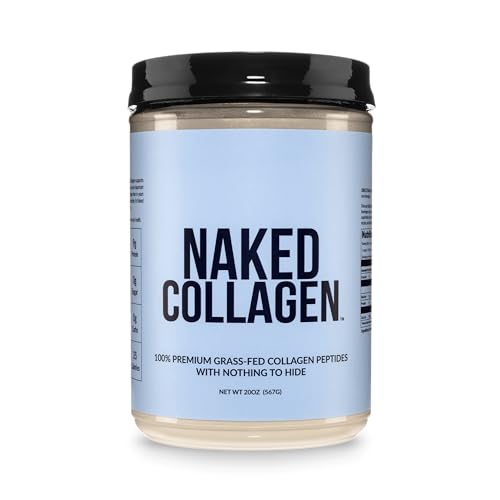
1 ingredientNSF Contents Certified9.5 g per serving
The #1 pick in our guide to the best collagen powder. It lists only bovine collagen peptides and carries the NSF Contents Certified mark. Most positive trials used specific branded peptides, so results may not carry over exactly to any one product.
Side Effects and Safety
In the Achilles pilot study, no side effects were reported9, but large long-term safety studies are limited. Fish collagen isn’t suitable for people with fish allergies, and most collagen comes from animals, so it isn’t vegetarian.
Final Verdict
Collagen peptides are an easy-to-mix protein with some positive trials for skin, joints and bones, but the evidence is modest, often industry-funded, and independent skin trials show no clear benefit345. They can’t replace complete protein in your diet10.
If you want to try them, consider NAKED Collagen, a single-ingredient bovine collagen powder with the NSF Contents Certified mark. Compare all picks in our guide to the best collagen powder, or see our picks for women and men.
Important: This guide is for general information and isn’t medical advice. Talk to your doctor before using collagen if you have a food allergy or take prescription medicine.
Frequently Asked Questions
What are collagen peptides?
Collagen broken into small protein chains so it dissolves easily. Hydrolyzed collagen and collagen hydrolysate are the same thing.
What are the benefits of collagen peptides?
How much collagen peptides should I take a day?
Trials used 2.5 to 15 g a day10.
How long do collagen peptides take to work?
Are collagen peptides and hydrolyzed collagen the same?
Yes. Both terms describe collagen broken down into peptides.
Is collagen better than whey protein?
Not as a protein source. Collagen lacks tryptophan and is an incomplete protein10.
Do collagen peptides really work for skin?
Industry-funded trials say yes, but a 2025 review found no effect in independent and high-quality trials3.
Sources & History
References
- Oral Intake of Specific Bioactive Collagen Peptides Reduces Skin Wrinkles and Increases Dermal Matrix Synthesis — Skin Pharmacology and Physiology, 2014
- Effects of Hydrolyzed Collagen Supplementation on Skin Aging: A Systematic Review and Meta-Analysis — International Journal of Dermatology, 2021
- Effects of Collagen Supplements on Skin Aging: A Systematic Review and Meta-Analysis of Randomized Controlled Trials — American Journal of Medicine, 2025
- Improvement of Activity-Related Knee Joint Discomfort Following Supplementation of Specific Collagen Peptides — Applied Physiology, Nutrition, and Metabolism, 2017
- Specific Collagen Peptides Improve Bone Mineral Density and Bone Markers in Postmenopausal Women: A Randomized Controlled Study — Nutrients, 2018
- Collagen Peptide Supplementation in Combination With Resistance Training Improves Body Composition and Increases Muscle Strength in Elderly Sarcopenic Men: A Randomised Controlled Trial — British Journal of Nutrition, 2015
- Exceptional Body Composition Changes Attributed to Collagen Peptide Supplementation and Resistance Training in Older Sarcopenic Men — British Journal of Nutrition, 2016
- The Influence of Specific Bioactive Collagen Peptides on Knee Joint Discomfort in Young Physically Active Adults: A Randomized Controlled Trial — Nutrients, 2021
- Oral Supplementation of Specific Collagen Peptides Combined With Calf-Strengthening Exercises Enhances Function and Reduces Pain in Achilles Tendinopathy Patients — Nutrients, 2019
- Significant Amounts of Functional Collagen Peptides Can Be Incorporated in the Diet While Maintaining Indispensable Amino Acid Balance — Nutrients, 2019
- Comparison of Gelatin and Low-Molecular Weight Gelatin Hydrolysate Ingestion on Hydroxyproline (Hyp), Pro-Hyp and Hyp-Gly Concentrations in Human Blood — Food Chemistry, 2022
Update history
- New guide covering what collagen peptides are, how they’re absorbed, benefits for skin, joints, bones, muscle and tendons, how much to take, protein quality and how to choose, based on 2021 and 2025 skin meta-analyses, branded trials and a 2019 protein analysis.