

We may earn a commission when you buy through our links, at no extra cost to you. As an Amazon Associate we earn from qualifying purchases. How we make money
At a Glance
- What it is Nicotinamide (also called niacinamide) is a form of vitamin B3 that’s much less likely than niacin to cause flushing8.
- Main finding In the ONTRAC trial, 500 mg twice a day cut new non-melanoma skin cancers by 23% in people who’d had at least two in the past 5 years1.
- Not for everyone In organ transplant recipients, the same dose didn’t reduce skin cancers2.
- Only while you take it The benefit disappeared once people stopped taking it1.
- Top pick Micro Ingredients Niacinamide – the #1 pick in our guide to the best niacinamide supplements: one 2-capsule serving gives 1,000 mg, the daily amount used in the trials.
The Short Answer: Oral nicotinamide can lower the chance of new basal cell and squamous cell skin cancers in people who’ve already had several. In a 12-month trial of 386 people, 500 mg twice a day reduced new non-melanoma skin cancers by 23% and precancerous spots (actinic keratoses) by 11% to 20%1. A 2025 study of more than 33,000 US veterans found a 14% lower risk overall, and 54% when people started after their first skin cancer3.
On this page
It’s not a cure-all. It didn’t help organ transplant recipients in a placebo-controlled trial2, and the benefit fades when you stop1. It also doesn’t replace sun protection or skin checks. Talk to your dermatologist before starting. For product picks, see our guide to the best niacinamide supplements.
What Is Nicotinamide?
Nicotinamide, also called niacinamide, is one of the two main forms of vitamin B3. The other is nicotinic acid, usually just called niacin. Flushing happens mainly with high doses of nicotinic acid, not nicotinamide8. The trials used 500 mg twice a day, far more than the 14 to 16 mg adults need daily8. For the differences, see our guide to niacinamide vs niacin.
How It May Protect Skin
UV light suppresses the skin’s immune defenses, which help guard against skin cancer. In a crossover trial, taking 500 mg or 1,500 mg of nicotinamide a day for a week reduced this UV-induced immune suppression in healthy volunteers6. Nicotinamide is also thought to boost the repair of UV-damaged DNA2.
Key Nicotinamide Skin Cancer Studies
| Study | Who and what | Result |
|---|---|---|
| ONTRAC 20151 | 386 adults with ≥2 non-melanoma skin cancers in 5 years; 500 mg twice daily or placebo; 12 months | 23% fewer new skin cancers; fewer actinic keratoses; no benefit after stopping |
| ONTRANS 20232 | 158 organ transplant recipients with ≥2 skin cancers; 500 mg twice daily or placebo; 12 months | No difference (207 vs 210 new cancers); stopped early for poor recruitment |
| US veterans 20253 | 33,822 veterans (12,287 took nicotinamide); records review | 14% lower risk overall; 54% if started after a first skin cancer |
| Meta-analysis 20224 | 29 trials, 3,039 people | 50% fewer skin cancers in 5 trials; more digestive side effects |
| Meta-analysis 20235 | 4 trials | No significant reduction when transplant and non-transplant patients were pooled |
Does Nicotinamide Prevent Skin Cancer?
People Who’ve Had Skin Cancer Before
The strongest evidence comes from the Australian ONTRAC trial. Participants had had at least two non-melanoma skin cancers in the previous 5 years. After 12 months, the nicotinamide group had 23% fewer new non-melanoma skin cancers than the placebo group. Squamous cell cancers were 30% lower and basal cell cancers 20% lower, though the basal cell result wasn’t statistically significant1.
Actinic keratoses, rough spots that can turn into squamous cell cancer, were 11% fewer at 3 months and 20% fewer at 9 months1. In the 6 months after people stopped taking nicotinamide, there was no benefit1.
Organ Transplant Recipients
Organ transplant recipients have a higher rate of skin cancer2. But in the ONTRANS trial, 12 months of nicotinamide didn’t reduce new skin cancers or actinic keratoses in 158 transplant recipients2. The trial was stopped early because of poor recruitment2. In the 2025 veterans study, transplant recipients also showed no overall reduction, though early use was linked to fewer squamous cell cancers3.
Real-World Evidence
A 2025 study of US Veterans Affairs records compared 12,287 people prescribed nicotinamide 500 mg twice daily with 21,479 similar people who weren’t. Nicotinamide users had a 14% lower risk of a new skin cancer. The reduction was 54% when they started after their first skin cancer, and smaller when they started after later ones3. Because this was an observational study, it can’t prove nicotinamide caused the difference.
Melanoma
The main trials counted basal and squamous cell cancers12. We didn’t find a trial showing that nicotinamide prevents melanoma.
Who Might Benefit
Based on the trials, nicotinamide is most likely to help adults who:
- Have had at least two basal or squamous cell skin cancers in the past 5 years1
- Aren’t organ transplant recipients, where a placebo-controlled trial found no benefit2
A 2022 review suggested considering it for people with a history of skin cancer, rating it a weak recommendation based on moderate-quality evidence4. Ask your dermatologist whether it fits your situation.
Dosage Used in the Trials
- Dose: 500 mg twice a day (1,000 mg daily)123
- Duration: 12 months in the trials12; the benefit didn’t last after stopping1
- Form: Nicotinamide (niacinamide), not niacin (nicotinic acid)18
These doses are far above the 35 mg upper limit for niacin from supplements, so they should be taken with medical supervision8.
Side Effects and Safety
In ONTRAC, side effects were similar on nicotinamide and placebo1. ONTRANS also found similar side effects and blood and urine test results in both groups2. A 2022 review linked nicotinamide to more digestive side effects4. Very high niacin doses, around 3,000 mg a day or more for months, have been linked to liver inflammation in severe cases8. For details, see our guide to niacinamide side effects.
Is It Worth the Cost?
A 2026 analysis of the same veterans estimated that nicotinamide prevented 624 skin cancers a year among 12,287 users and saved more in treatment costs than it cost7. In VA records, there were 0.204 new skin cancers per person each year among users vs 0.255 among non-users7.
Our Top Niacinamide Pick
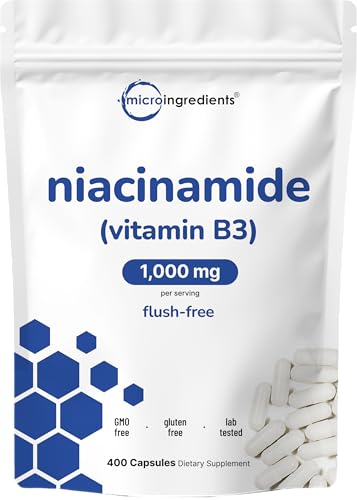
500 mg per capsule1,000 mg per servingTrial daily amount
The #1 pick in our guide to the best niacinamide supplements. One 2-capsule serving gives 1,000 mg of niacinamide, the daily amount used in the skin cancer trials, at the lowest cost per serving of the products we compared. The product itself hasn’t been tested in its own trial.
Final Verdict
Nicotinamide 500 mg twice a day is one of the few supplements with a positive large trial for preventing skin cancer, but only in a specific group: people who’ve already had several non-melanoma skin cancers1. It didn’t help transplant recipients2, and the benefit stops when you stop taking it1.
If your dermatologist agrees it’s right for you, consider Micro Ingredients Niacinamide, which gives the trial’s 1,000 mg daily amount in one 2-capsule serving. Compare all picks in our guide to the best niacinamide supplements.
Important: This guide is for general information and isn’t medical advice. Nicotinamide doesn’t replace sunscreen, protective clothing or regular skin checks. Talk to your doctor before taking high doses, especially if you have liver disease.
Frequently Asked Questions
Does nicotinamide prevent skin cancer?
How much nicotinamide should I take for skin cancer prevention?
How long does nicotinamide take to work?
Is nicotinamide the same as niacinamide?
Yes. They’re two names for the same form of vitamin B3. Niacin (nicotinic acid) is a different form that’s more likely to cause flushing8.
Does nicotinamide prevent melanoma?
Can I take nicotinamide after an organ transplant?
A 12-month trial in transplant recipients found no benefit2. Ask your transplant team before taking it.
Sources & History
References
- A Phase 3 Randomized Trial of Nicotinamide for Skin-Cancer Chemoprevention — New England Journal of Medicine, 2015
- Nicotinamide for Skin-Cancer Chemoprevention in Transplant Recipients — New England Journal of Medicine, 2023
- Nicotinamide for Skin Cancer Chemoprevention — JAMA Dermatology, 2025
- Effect of Nicotinamide in Skin Cancer and Actinic Keratoses Chemoprophylaxis, and Adverse Effects Related to Nicotinamide: A Systematic Review and Meta-Analysis — Journal of Cutaneous Medicine and Surgery, 2022
- The Role of Nicotinamide as Chemo-Preventive Agent in NMSCs: A Systematic Review and Meta-Analysis — Nutrients, 2023
- Oral Nicotinamide Protects Against Ultraviolet Radiation-Induced Immunosuppression in Humans — Carcinogenesis, 2009
- Cost-Effectiveness of Oral Nicotinamide for Keratinocyte Carcinoma Prevention — JAMA Dermatology, 2026
- Niacin – Vitamin B3 — The Nutrition Source, Harvard T.H. Chan School of Public Health
Update history
- New guide covering oral nicotinamide for skin cancer prevention, based on the ONTRAC and ONTRANS trials, the 2025 US veterans study, 2022 and 2023 meta-analyses and a 2026 cost analysis.