Written byAnju Mobin, B.ScNutritionist · B.Sc. Clinical Nutrition & DieteticsLast updatedProducts compared6 picks from 15 productsHow we review →
We may earn a commission when you buy through our links, at no extra cost to you. As an Amazon Associate we earn from qualifying purchases. How we make money
At a Glance
- Best Overall HealthCareAisle Diclofenac Gel 1% – the same FDA-approved 1% diclofenac as Voltaren, fragrance-free and for less.Review ↓
- Best Brand-Name Diclofenac Voltaren Arthritis Pain Gel – the original 1% diclofenac gel with a dosing card.Review ↓
- Best If You Can’t Use NSAIDs Aspercreme Lidocaine Cream – maximum OTC lidocaine that numbs without heat, cold or smell.Review ↓
- Best Odor-Free Budget Pick Aspercreme Original – a scent-free salicylate cream at the lowest cost per use.Review ↓
The Short Answer: The best arthritis creams for real joint pain contain diclofenac, an anti-inflammatory drug that works at the joint instead of just masking pain on the skin. HealthCareAisle Diclofenac Gel 1% is our top pick: the same FDA-approved 1% diclofenac as Voltaren Arthritis Pain Gel, without fragrance and for less. Choose Voltaren if you prefer the original brand and its dosing card. If you can’t take NSAIDs, a lidocaine cream is the safer short-term option.
On this page
- Do You Actually Need an Arthritis Cream?
- Find Your Match
- Arthritis Creams Compared
- The 6 Best Arthritis Creams and Gels, Reviewed
- Products We Didn’t Recommend
- Evidence Scorecard
- How to Use Arthritis Creams for Best Results
- What to Expect and When
- Safety, Side Effects & Drug Interactions
- How to Choose an Arthritis Cream
- Frequently Asked Questions
- Final Verdict
Most “arthritis creams” on the shelf rely on a cooling or warming sensation, which distracts from pain for an hour or two but does little for the joint itself. Only one OTC ingredient, topical diclofenac, has strong evidence for arthritis pain in the knees and hands13.
We compared 15 popular creams, gels and rubs by active ingredient, strength, evidence, daily use limits and cost per application, following our review process. Every product here made our shortlist; the BFN Score shows how they rank against each other.
Do You Actually Need an Arthritis Cream?
Topical pain relievers work best for arthritis in joints close to the skin, such as the knees, hands, wrists, elbows, ankles and feet. Deep joints like the hip and spine sit under thick muscle, so far less of the drug reaches them3.
A cream makes the most sense if you have mild to moderate osteoarthritis pain, if you are 60 or older, or if oral NSAIDs like ibuprofen upset your stomach. Topical diclofenac reaches much lower levels in the blood than an oral tablet, which is why guidelines recommend trying it before oral NSAIDs for knee and hand osteoarthritis3.
A cream is not a substitute for a diagnosis. New joint swelling, redness, warmth, morning stiffness that lasts more than an hour, or pain in many joints at once can point to inflammatory arthritis or gout, which need medical treatment8.
Who Should Skip It (or Ask First)
- People allergic to aspirin or other NSAIDs (avoid diclofenac and salicylate creams).
- Anyone taking blood thinners such as warfarin (salicylate and NSAID creams can add to bleeding risk).
- People with heart, kidney or liver disease, or a history of stomach ulcers, before using diclofenac.
- Pregnancy, especially from 20 weeks onward (avoid diclofenac unless a doctor directs it).
- Broken, irritated or sunburned skin over the joint.
If you already take a daily pain reliever or have a chronic condition, check with your doctor or pharmacist before adding a medicated cream.
Find Your Match
| If you… | Consider | Why |
|---|---|---|
| Want the strongest OTC relief for knee or hand arthritis | Voltaren Arthritis Pain Gel | Licensed 1% diclofenac with a dosing card |
| Want the same drug for less, without fragrance | HealthCareAisle Diclofenac Gel 1% | Same active ingredient, fragrance-free base |
| Can’t use NSAIDs or take blood thinners | Aspercreme Lidocaine Cream | Numbs nerve endings; no NSAID or salicylate |
| Need something scent-free for work or daytime | Aspercreme Original | No smell, low cost per use |
| Like an instant cooling feeling | Biofreeze Pain Relief Cream | 10% menthol, dye-free cream |
| Prefer a warming cream you use every day | Penetrex Arthritis Warming Cream | Low-dose capsaicin that builds up over weeks |
| Have sudden swelling, redness or fever with joint pain | See a doctor first | These are not signs of everyday osteoarthritis |
Arthritis Creams Compared
Scroll sideways to see every column →
| # | Product | Type | Active Ingredient | Strength | Size | Max Uses per Day | Scent | Additives | Cost |
|---|---|---|---|---|---|---|---|---|---|
| 1 | HealthCareAisle Diclofenac Gel | Gel | Diclofenac sodium (NSAID) | 1% | 150 g | 4 | Fragrance-free | Clean | $$$ |
| 2 | Voltaren Arthritis Pain Gel | Gel | Diclofenac sodium (NSAID) | 1% | 150 g | 4 | Light fragrance | Note: fragrance | $$$ |
| 3 | Aspercreme Lidocaine Cream | Cream | Lidocaine HCl | 4% | 2 × 4.3 oz | 3–4 | Fragrance-free | Note: denatured alcohol | $$$ |
| 4 | Aspercreme Original | Cream | Trolamine salicylate | 10% | 3 oz | 4 | Odor-free | Clean | $$$ |
| 5 | Biofreeze Pain Relief Cream | Cream | Menthol | 10% | 3 oz | 3–4 | Strong menthol | Clean | $$$ |
| 6 | Penetrex Arthritis Warming Cream | Cream | Capsaicin | 0.025% | 2 oz | 3–4 | Mild herbal | Note: essential oils, camphor | $$$ |
Cost tiers per application (about 2–4 g): $ under $0.25 · $$ $0.25–$0.50 · $$$ over $0.50 (checked October 2026). Max uses per day follow each product’s label.
The 6 Best Arthritis Creams and Gels, Reviewed
#1Best Overall
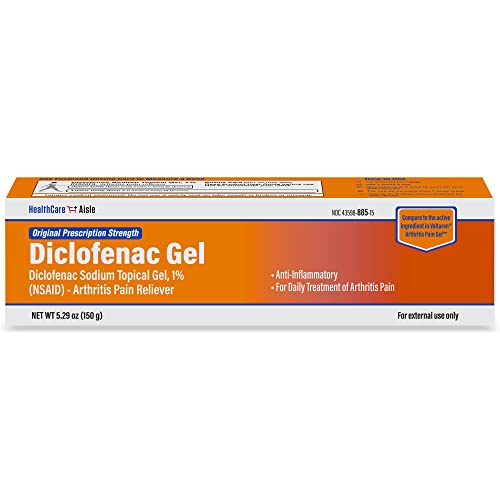
1. HealthCareAisle Diclofenac Gel 1%
BFN Score9.6/10
$$$Mid-range150 g tube2–4 g per application
Strongest atEvidence fitWeakest atQuality & trust
This is a store-brand version of the same 1% diclofenac gel, sold at a noticeably lower cost per application. It matches Voltaren on evidence and dose, skips the fragrance and costs less, which puts it first; check the expiry date, since some buyers report short-dated tubes.
Label Reality Check
- Active ingredient
- diclofenac sodium 1%, an NSAID
- Dose per application
- 2 g (upper body joints) or 4 g (lower body joints)
- Dose vs. research
- Matches the licensed dose used in clinical trials
- Daily limit
- 4 times a day, up to 21 days unless a doctor advises longer
- Quality
- FDA-approved generic drug
- Other ingredients
- carbomer homopolymer type C, coco-caprylate/caprate, isopropyl alcohol, mineral oil, polyoxyl 20 cetostearyl ether, propylene glycol, purified water, strong ammonia solution
- Additives
- Clean – no fragrance listed
- Allergens
- Not for people allergic to aspirin or other NSAIDs
- Safety flags
- NSAID: avoid with aspirin or NSAID allergy and in late pregnancy; ask a doctor if you have heart, kidney or stomach-bleeding problems or take blood thinners
Clinical Relevance
Because the active ingredient and strength match the brand product, the same trial evidence applies1. Topical NSAIDs and licensed-dose capsaicin are the only two OTC topical options with trial support for osteoarthritis pain2.
Strengths
- Same drug and strength as Voltaren for less
- No added fragrance
- Large 150 g tube
Limitations
- Some buyers report receiving tubes close to their expiry date
- No travel-friendly sizes in this listing
- Same body-area and 21-day limits as the brand
Practical Details
Check the expiry date when the tube arrives, and measure each dose rather than squeezing by eye. Apply to clean, dry skin and let it dry before dressing.
Best For / Not For
Best forregular users of diclofenac gel who want to cut the cost.
Not foranyone who should avoid NSAIDs.
Buyer Experience
Many buyers say this gel works as well as the brand name for arthritis pain, especially in the knees, and appreciate paying much less. Several say they would happily switch from the national brand.
Opinions on smell are split: some notice almost none, while others find the scent of the base strong. A recurring complaint is receiving tubes with a short or past expiration date, which led a few buyers to say they would not order again.
vs. Voltaren Arthritis Pain Gel
Pick this one to save money on the same drug. Pick Voltaren if you want the dosing card and fewer quality complaints.
Nutritionist’s Note
Do not use two diclofenac products at the same time. Doubling up raises the risk of side effects without adding relief.
Verdict: The smart way to get licensed diclofenac at a lower cost.
#2Best Brand-Name Diclofenac
2. Voltaren Arthritis Pain Gel

BFN Score9.3/10
$$$Premium150 g tube2–4 g per application
Strongest atEvidence fitWeakest atValue & practicality
Voltaren was the first topical diclofenac the FDA moved from prescription to over the counter for arthritis pain, at the same 1% strength doctors prescribed7. It is the only type of product on this list that acts on joint inflammation rather than on skin sensation.
Label Reality Check
- Active ingredient
- diclofenac sodium 1% (equal to 0.93% diclofenac), an NSAID
- Dose per application
- 2 g for a hand, wrist or elbow; 4 g for a knee, ankle or foot, measured with the included dosing card
- Dose vs. research
- Matches the licensed dose used in clinical trials
- Daily limit
- 4 times a day, up to 21 days unless a doctor advises longer
- Quality
- FDA-approved OTC drug made under drug manufacturing rules
- Other ingredients
- carbomer homopolymer type C, cocoyl caprylocaprate, fragrance, isopropyl alcohol, mineral oil, polyoxyl 20 cetostearyl ether, propylene glycol, purified water, strong ammonia solution
- Additives
- Note – contains fragrance, which can bother very sensitive skin
- Allergens
- Not for people allergic to aspirin or other NSAIDs
- Safety flags
- NSAID: avoid with aspirin or NSAID allergy and in late pregnancy; ask a doctor if you have heart, kidney or stomach-bleeding problems or take blood thinners
Clinical Relevance
In a Cochrane review of people with knee or hand osteoarthritis, topical diclofenac gave substantial pain relief to roughly one extra person in ten compared with a placebo gel over 6 to 12 weeks, with few side effects beyond mild skin reactions1. Guidelines from the American College of Rheumatology strongly recommend topical NSAIDs for knee osteoarthritis and conditionally for the hands3.
Strengths
- Strongest evidence of any OTC arthritis cream
- Dosing card prevents over- or under-applying
- Non-greasy gel with an easy one-hand cap
Limitations
- Highest cost per application on this list
- Labeled only for hands, wrists, elbows, knees, ankles and feet, not the back, hip or shoulder
- Needs regular use, up to 4 times a day, for the best effect
Practical Details
Rub the measured dose into the joint four times a day and wait at least an hour before bathing. Do not cover it with a tight bandage or heat pack, and wash your hands afterward unless your hands are the area being treated.
Best For / Not For
Best forknee or hand osteoarthritis when you want the most evidence-backed OTC option.
Not forback or hip pain, NSAID allergy, late pregnancy, or people told to avoid NSAIDs.
Buyer Experience
Buyers frequently say the gel starts working within minutes and helps most with knee pain. Many like that it absorbs without a sticky or greasy feel and does not leave a strong medicinal smell.
A smaller group feels the price is high for how quickly a tube goes when used four times a day. Some buyers also raise concerns about the liver, kidney and heart warnings on the label, which is a reasonable thing to discuss with a doctor if you have those conditions.
vs. HealthCareAisle Diclofenac Gel 1%
Both contain the same 1% diclofenac. Choose Voltaren for the dosing card and consistent quality; choose HealthCareAisle if price matters more or you want a fragrance-free gel.
Nutritionist’s Note
Even on the skin, diclofenac is still an NSAID. Avoid using it alongside oral ibuprofen, naproxen or aspirin unless your doctor approves, and ask first if you take blood thinners, steroids or blood pressure medicines.
Verdict: The strongest, best-studied arthritis cream you can buy without a prescription.
#3Best If You Can’t Use NSAIDs
3. Aspercreme Lidocaine Cream

BFN Score8.7/10
$$$Budget2 × 4.3 oz tubesthin layer per application
Strongest atValue & practicalityWeakest atEvidence fit
Lidocaine numbs the nerve endings under the skin, so it eases pain without an NSAID, a salicylate or a hot-and-cold sensation. That makes it the most useful option for people on blood thinners or who are allergic to aspirin.
Label Reality Check
- Active ingredient
- lidocaine HCl 4%
- Dose per application
- a thin layer every 6 to 8 hours
- Dose vs. research
- 4% is the highest lidocaine strength sold without a prescription
- Daily limit
- 3 to 4 times a day; stop after 7 days if pain persists
- Quality
- OTC drug made under FDA rules for topical pain relievers
- Other ingredients
- acrylates/C10-30 alkyl acrylate crosspolymer, alcohol denat. (15%), aloe leaf juice, aminomethyl propanol, C30-45 alkyl cetearyl dimethicone crosspolymer, caprylyl methicone, cetearyl alcohol, ceteth-20 phosphate, dicetyl phosphate, dimethicone, disodium EDTA, ethylhexylglycerin, glyceryl stearate, methylparaben, steareth-21, water
- Additives
- Note – 15% denatured alcohol may sting dry or cracked skin
- Allergens
- Avoid if you have had a reaction to “-caine” numbing medicines
- Safety flags
- Avoid if allergic to “-caine” numbing medicines; don’t use on broken skin or with heat
Clinical Relevance
Lidocaine blocks pain signals from nerves in the skin and the tissue just below it. There are few trials of lidocaine cream specifically in osteoarthritis, so its benefit for joint pain is less certain than diclofenac’s, but it is a low-risk option for short-term relief.
Strengths
- No NSAID or salicylate, so fewer drug interactions
- Fragrance-free with no heat or cooling sensation
- Lowest cost per application of the medicated picks
Limitations
- Weaker evidence for arthritis than diclofenac
- Relief tends to fade after a few hours
- Not for large areas or broken skin
Practical Details
Use a thin layer only on the painful joint, not over large areas. Do not use it with a heating pad, and wash your hands well afterward so you don’t numb your eyes or mouth.
Best For / Not For
Best forpeople who need to avoid NSAIDs or aspirin-type drugs.
Not forlarge areas, damaged skin, or a known lidocaine allergy.
Buyer Experience
Buyers often mention that this cream has very little smell and does not heat up or cool down like menthol rubs, which makes it easy to use during the day. Many say it works quickly and lasts around four hours, and some use it for nerve pain in the feet.
A smaller group says the relief does not last as long as the packaging suggests. A few found it no more helpful than a regular moisturizer for deeper joint pain.
vs. Aspercreme Original
Both are odor-free. Choose the lidocaine version for numbing relief without a salicylate; choose Original if you want the lowest price and can safely use salicylates.
Nutritionist’s Note
Using too much lidocaine over a large area can be absorbed into the bloodstream. Stick to the label amount and one or two small areas at a time.
Verdict: The best fallback when NSAID creams are off the table.
#4Best Odor-Free Budget Pick
4. Aspercreme Original

BFN Score8.4/10
$$$Budget3 oz tubethin layer per application
Strongest atValue & practicalityWeakest atEvidence fit
Aspercreme Original uses trolamine salicylate, an aspirin-related ingredient, in a cream with no scent at all. It is the cheapest option here, but the evidence that salicylate creams help long-term arthritis pain is weak.
Label Reality Check
- Active ingredient
- trolamine salicylate 10%
- Dose per application
- a thin layer up to 4 times a day
- Dose vs. research
- 10% is the standard OTC strength
- Quality
- OTC drug made under FDA rules for topical pain relievers
- Other ingredients
- aloe leaf juice, cetyl alcohol, glycerin, methylparaben, mineral oil, potassium phosphate, propylparaben, stearic acid, triethanolamine, water
- Additives
- Clean – common cream base and preservatives
- Allergens
- Not for people allergic to aspirin or salicylates
- Safety flags
- Salicylate: avoid with aspirin allergy; ask a doctor if you take blood thinners
Clinical Relevance
A Cochrane review found no good evidence that salicylate rubs relieve chronic muscle or joint pain, and suggested that better options exist4. Some people still find short-term relief, so it earns a place as a low-cost, scent-free choice rather than a strong one.
Strengths
- Completely odor-free
- Lowest cost per use on this list
- Absorbs quickly without grease
Limitations
- Weak evidence for chronic arthritis pain
- Still a salicylate, so not for people on blood thinners or with aspirin allergy
- Relief usually lasts a few hours
Practical Details
Rub in a thin layer and let it dry before dressing. Don’t combine it with other salicylate rubs or use it under a heating pad.
Best For / Not For
Best formild aches when you need something scent-free and inexpensive.
Not foraspirin allergy, warfarin users, or anyone wanting the strongest relief.
Buyer Experience
Buyers often say it works better than they expected, with relief lasting about three to five hours. They like that it is non-greasy, absorbs quickly and has no smell, and several call it their go-to odorless pain cream.
Feedback on how easy it is to use is mixed, and people with stronger arthritis pain tend to find it too mild on its own.
vs. Biofreeze Pain Relief Cream
Choose Aspercreme Original if you need zero smell. Choose Biofreeze if you want a noticeable cooling sensation and don’t mind menthol.
Nutritionist’s Note
Salicylates absorbed through the skin can add to the effect of blood thinners. If you take warfarin or another anticoagulant, choose lidocaine instead or ask your doctor first.
Verdict: A fine scent-free, low-cost option for mild aches, not a strong arthritis treatment.
#5Best Cooling Relief
5. Biofreeze Pain Relief Cream

BFN Score8.3/10
$$$Mid-range3 oz tubethin layer per application
Strongest atPurity & additivesWeakest atEvidence fit
Menthol creams create a cooling feeling that distracts the nerves from pain, which is why they feel fast. We chose the Biofreeze cream over the classic green gel because the cream has no synthetic dyes and a stronger 10% menthol.
Label Reality Check
- Active ingredient
- menthol 10%
- Dose per application
- a thin film up to 3 to 4 times a day
- Dose vs. research
- 10% is within the range allowed for OTC menthol pain relievers
- Quality
- OTC drug made under FDA rules for topical pain relievers
- Other ingredients
- caprylic/capric triglyceride, caprylyl glycol, cetearyl alcohol, dimethicone, gluconolactone, glycerin, glyceryl stearate, hydroxyacetophenone, yerba mate leaf extract, iodopropynyl butylcarbamate, phenoxyethanol, polysorbate 60, sodium benzoate, sodium hydroxide, sodium stearoyl lactylate, tetrasodium EDTA, tocopheryl acetate, grape seed oil, water
- Additives
- Clean – no dyes (the Biofreeze gel contains Blue 1 and Yellow 5)
- Allergens
- None of the major food allergens listed
- Safety flags
- Rare serious skin burns reported with OTC menthol products; don’t use with heating pads or tight bandages
Clinical Relevance
Menthol activates cold receptors in the skin, which can dull pain signals for a short time. There is little trial evidence that menthol improves arthritis pain over weeks, and the FDA has reported rare serious skin burns from menthol products, mostly at higher strengths or under heat or tight wraps6.
Strengths
- Fast, noticeable cooling
- Dye-free cream base
- Non-greasy and easy to spread
Limitations
- Short-lived relief for many people
- Strong menthol scent
- Little evidence for long-term arthritis benefit
Practical Details
Apply a thin film only; more is not stronger. Wash your hands with cool water afterward and never use it under a heating pad or tight bandage.
Best For / Not For
Best forquick relief of flare-ups or stiff joints before activity.
Not forsensitive skin, broken skin, or anyone who dislikes strong scents.
Buyer Experience
Buyers frequently say the cream works well, especially on sore muscles, and like that it goes on easily without leaving a sticky film. The cooling feeling is the main reason people choose it.
Opinions on how long it lasts are mixed, with some reporting it wears off within about four hours. The scent also splits people between “pleasant” and “very strong,” and some feel the tube is small for the price.
vs. Penetrex Arthritis Warming Cream
Choose Biofreeze for instant cooling you can feel right away. Choose Penetrex if you’re willing to use a warming capsaicin cream daily for a few weeks.
Nutritionist’s Note
Menthol is a counterirritant, not an anti-inflammatory. If you need it several times a day for weeks, talk to your doctor about a treatment that works on the joint itself.
Verdict: The best pick for quick, cooling relief from flare-ups.
#6Best Warming Capsaicin Cream
6. Penetrex Arthritis Warming Cream

BFN Score8.2/10
$$$Premium2 oz jarthin layer per application
Strongest atEvidence fitWeakest atValue & practicality
Capsaicin, the compound that makes chili peppers hot, slowly reduces pain signaling from nerves in the skin when used every day. This cream uses 0.025% capsaicin, the strength used in licensed-dose osteoarthritis trials, with arnica and other botanicals.
Label Reality Check
- Active ingredient
- capsaicin 0.025%
- Dose per application
- a thin layer 3 to 4 times a day
- Dose vs. research
- Matches the 0.025% licensed dose studied in osteoarthritis
- Quality
- OTC drug made under FDA rules for topical pain relievers
- Other ingredients
- water, sunflower seed oil, glycerin, glyceryl stearates, arnica flower extract, cetearyl alcohol, ceteareth-20, PEG-100 stearate, shea butter, cetyl esters, ammonium acryloyldimethyltaurate/VP copolymer, aloe leaf juice, dimethicone, ethoxydiglycol, phenoxyethanol, methyl gluceth-20, peppermint oil, camphor, ethylhexylglycerin, potassium sorbate, glucosamine HCl, choline bitartrate, pyridoxine HCl, dipotassium glycyrrhizinate, methylsulfonylmethane, disodium EDTA, boswellia oil, sodium benzoate, tea tree leaf oil, tocopherol, citric acid, beta-sitosterol, squalene
- Additives
- Note – peppermint, tea tree oil and camphor can irritate sensitive skin
- Allergens
- Avoid if you react to plants in the daisy family (arnica)
- Safety flags
- Burning is common at first; keep away from eyes; avoid with daisy-family (arnica) allergy
Clinical Relevance
In a network meta-analysis, capsaicin at the licensed 0.025% dose relieved osteoarthritis pain about as well as topical NSAIDs, but only a handful of small trials supported it, so the estimate is uncertain2. The American College of Rheumatology conditionally recommends topical capsaicin for knee osteoarthritis but not for the hands, partly because of the risk of getting it in the eyes3.
Strengths
- Uses the capsaicin strength studied in osteoarthritis
- No NSAID or salicylate
- Little smell compared with menthol rubs
Limitations
- Burning or stinging is common in the first one to two weeks
- Needs regular daily use to work
- Small jar for the price; the glucosamine, MSM and vitamin B6 add little through the skin
Practical Details
Use it three to four times a day for at least two weeks before judging results. Wash your hands with soap right after applying, keep it away from your eyes, and do not use it before a hot shower or under a heating pad.
Best For / Not For
Best forknee pain in people who can’t use NSAIDs and are willing to use a cream daily.
Not forhands you touch your face with, sensitive skin, or anyone wanting instant relief.
Buyer Experience
Some buyers love this cream and say the relief lasts several hours without needing an NSAID, and many appreciate that it has no strong odor. Others feel it does not work as well as the original Penetrex formula.
Skin irritation is the most common complaint, with many describing a burning sensation that lasts for hours. Some also find it hard to wash off their hands, and opinions on value are split because of the small jar.
vs. Biofreeze Pain Relief Cream
Choose Penetrex for a capsaicin cream with better long-term evidence if you can tolerate the warmth. Choose Biofreeze if you want immediate relief without a build-up period.
Nutritionist’s Note
Capsaicin burns are worse on broken skin and under heat. Start on a small area, and stop if the burning becomes severe or the skin blisters6.
Verdict: A reasonable non-NSAID option for knee pain if you can handle the warming phase.
Products We Didn’t Recommend
MediNatura T-Relief Arnica +12 Cream. This is a homeopathic product, so its “active ingredients” are diluted to very low levels, and there is no reliable evidence that homeopathic dilutions relieve arthritis pain.
Bengay Ultra Strength. It combines 30% methyl salicylate with menthol and camphor. It feels strong, but salicylate rubs have weak evidence for chronic pain4, and the high salicylate content calls for extra care in older adults taking blood thinners.
Capsaicin creams sold as multi-packs from resellers. Several higher-strength capsaicin listings came from third-party sellers with few reviews or unclear expiry dates, so we preferred a product with a clearly labeled licensed dose.
Magnesium and Epsom salt “arthritis” creams. These may feel soothing as a massage cream, but there is no good evidence that magnesium absorbed through the skin relieves arthritis pain.
Evidence Scorecard
| Ingredient | What it’s studied for | Evidence level | Notes |
|---|---|---|---|
| Diclofenac 1% gel | Knee and hand osteoarthritis pain | Strong | Multiple RCTs and a Cochrane review; strongly recommended for knee OA13 |
| Capsaicin 0.025% | Knee osteoarthritis pain | Moderate | Few small trials; conditionally recommended for knee, not hand23 |
| Lidocaine 4% | Local nerve pain | Limited | Little trial data in osteoarthritis specifically |
| Menthol | Short-term pain relief | Limited | Counterirritant; rare burns reported6 |
| Trolamine / methyl salicylate | Muscle and joint pain | Limited | Cochrane found no good evidence for chronic pain4 |
| Arnica (non-homeopathic gel) | Hand osteoarthritis | Limited | One trial found results similar to ibuprofen gel5 |
The ingredients in our top picks range from strong support (diclofenac) to short-term symptom relief (menthol, lidocaine, salicylates). None of them repair cartilage or stop arthritis from progressing, and they should not replace medical care for worsening joints.
How to Use Arthritis Creams for Best Results
| Active ingredient | OTC strength | How often | How long without a doctor |
|---|---|---|---|
| Diclofenac | 1% | 4 times a day (2 g upper body, 4 g lower body) | Up to 21 days |
| Lidocaine | Up to 4% | Every 6–8 hours, max 3–4 times a day | 7 days if pain persists |
| Capsaicin | 0.025%–0.1% | 3–4 times a day, every day | Judge after 2–4 weeks |
| Menthol | Up to 16% | 3–4 times a day | 7 days if pain persists |
| Trolamine salicylate | 10% | Up to 4 times a day | 7 days if pain persists |
Apply creams to clean, dry, unbroken skin over the painful joint and rub in until absorbed. Use them on no more than one or two joints at a time unless the label says otherwise.
Never use a heating pad, hot water bottle or tight wrap over a medicated cream, because heat increases absorption and the risk of burns6. Wash your hands after every application, unless your hands are the joints being treated.
Avoid layering two medicated creams on the same joint. If you take oral pain relievers, check with a pharmacist before adding a diclofenac or salicylate cream.
What to Expect and When
Menthol, lidocaine and salicylate creams usually work within minutes and wear off within a few hours. They are best for flare-ups or before activity.
Diclofenac gel can ease pain within the first day or two, but the full effect in trials was measured over several weeks of regular use1. Capsaicin takes the longest: expect warmth or stinging at first, and judge results after two to four weeks of use three to four times a day2.
If a cream gives no meaningful relief after two to three weeks of correct use, or if you need diclofenac for longer than 21 days, see your doctor to review your diagnosis and treatment plan.
Safety, Side Effects & Drug Interactions
The most common side effects of arthritis creams are redness, itching, dryness or burning at the application site. Stop using the product if you notice blistering, severe burning or swelling, and seek medical help for signs of an allergic reaction such as hives, facial swelling or wheezing.
| Medication or condition | Possible interaction | What to do |
|---|---|---|
| Blood thinners (warfarin, apixaban, clopidogrel) | Diclofenac and salicylates can add to bleeding risk | Prefer lidocaine; ask your doctor first |
| Oral NSAIDs or aspirin | Doubling NSAID exposure raises side-effect risk | Don’t combine with diclofenac gel unless advised |
| Aspirin or NSAID allergy, asthma triggered by aspirin | Risk of allergic reaction | Avoid diclofenac and salicylate creams |
| Heart failure, kidney or liver disease | NSAID warnings apply even to gels | Ask your doctor before diclofenac |
| Pregnancy (20 weeks or later) | NSAIDs may affect the baby | Avoid diclofenac unless directed by a doctor |
| Heating pads, hot baths, tight wraps | Higher absorption and burn risk | Never combine with medicated creams6 |
Keep all medicated creams away from children and pets, and store them closed at room temperature.
How to Choose an Arthritis Cream
Active Ingredient
Start with the ingredient, not the brand name. Diclofenac treats joint inflammation; lidocaine numbs; menthol cools; capsaicin warms over time; salicylates are mild aspirin-like pain relievers.
Strength
Look for the percentage on the Drug Facts panel: 1% diclofenac, 4% lidocaine, 0.025%–0.1% capsaicin, 10% trolamine salicylate. Words like “maximum strength” mean little without the number.
Which Joint Hurts
Gels work best for joints close to the skin, such as knees, hands, elbows, ankles and feet. Hip and back pain respond less to creams, and Voltaren is not labeled for them.
Your Medicines and Health
If you take blood thinners, have kidney or heart disease, or react to aspirin, skip diclofenac and salicylates and choose lidocaine, or ask your doctor first.
Additives and Allergens
Most cream bases, such as carbomer, glycerin and cetearyl alcohol, are harmless. People with sensitive skin should watch for fragrance, essential oils, camphor and high amounts of alcohol, which can sting or irritate.
Cost per Application
Compare price by how many applications a tube gives you. Diclofenac needs 2–4 g per dose, so a large tube is often better value than a small, cheap one.
Label Red Flags
- No active ingredient or percentage listed
- “Homeopathic” in small print on an arthritis cream
- Claims to “rebuild cartilage” or “cure arthritis”
- CBD or hemp products that hide the real pain-relieving ingredient
- Expired or very short-dated stock
Important: These products are not intended to diagnose, treat, cure, or prevent any disease. Results vary by individual. If you have a health condition or take medications, check with your doctor before adding any new pain reliever to your routine.
Frequently Asked Questions
What is the strongest arthritis cream you can buy over the counter?
Which arthritis cream works the fastest?
Menthol and lidocaine creams work within minutes because they act on nerves in the skin, but the relief usually fades within a few hours. Diclofenac may take a day or two of regular use to work well, yet it does more for the underlying joint pain over time.
Is Voltaren better than generic diclofenac gel?
Not in terms of the drug. Generic 1% diclofenac gel has the same active ingredient and strength as Voltaren. Voltaren adds a dosing card and consistent packaging, while generics usually cost less.
Can I use an arthritis cream on my back or hip?
Menthol, lidocaine and salicylate creams are labeled for backaches, but diclofenac gel is only labeled for the hands, wrists, elbows, knees, ankles and feet. Hip and spine joints sit deep under muscle, so creams generally help them less3.
Do natural or drug-free creams like arnica work?
Evidence is limited. One trial found an arnica gel similar to ibuprofen gel for hand osteoarthritis5, but homeopathic arnica creams contain only tiny amounts and have no reliable evidence. Drug-free massage creams may feel soothing, but they are not proven to reduce arthritis pain.
Is it safe to use arthritis cream with blood thinners?
Be careful. Diclofenac and salicylate creams (such as Aspercreme Original and Bengay) can add to the bleeding risk of drugs like warfarin. Lidocaine creams don’t carry this risk, but ask your doctor or pharmacist before using any medicated cream if you take an anticoagulant.
Final Verdict
For most people with knee or hand osteoarthritis, the best arthritis cream is a 1% diclofenac gel. HealthCareAisle Diclofenac Gel 1% is our top pick because it delivers the same drug as Voltaren Arthritis Pain Gel for less; choose Voltaren if you want the original brand and its dosing card.
If you can’t use NSAIDs, choose Aspercreme Lidocaine Cream. For quick relief during flare-ups, Biofreeze Pain Relief Cream or Aspercreme Original can help, and Penetrex Arthritis Warming Cream suits patient daily users.
See a doctor if your joints are swollen, hot or red, if pain wakes you at night, or if you need a cream for more than three weeks.
For joint support beyond creams, see our guides to the best osteoarthritis supplements and the best knee supplements.
Sources & History
References
- Topical NSAIDs for chronic musculoskeletal pain in adults — Cochrane Database of Systematic Reviews, 2016
- The relative efficacy of topical NSAIDs and capsaicin in osteoarthritis: a network meta-analysis — Osteoarthritis and Cartilage, 2018
- 2019 American College of Rheumatology/Arthritis Foundation Guideline for the Management of Osteoarthritis of the Hand, Hip, and Knee — Arthritis Care & Research, 2020
- Salicylate-containing rubefacients for acute and chronic musculoskeletal pain in adults — Cochrane Database of Systematic Reviews, 2014
- Choosing between NSAID and arnica for topical treatment of hand osteoarthritis — Rheumatology International, 2007
- FDA Drug Safety Communication: Rare cases of serious burns with OTC topical muscle and joint pain relievers — U.S. Food and Drug Administration
- FDA approves Voltaren Arthritis Pain for nonprescription use — Healio, 2020
- Osteoarthritis — National Institute of Arthritis and Musculoskeletal and Skin Diseases (NIH)
Update history
- Re-scored all picks with our updated five-criteria method (evidence fit, dose & safety, quality & trust, purity & additives, value & practicality), added brand recall checks, safety flags and a What We Found summary. The generic diclofenac gel moved to #1; Voltaren is now our brand-name pick. October 31, 2026 – Rebuilt the guide around active ingredients and evidence; compared 15 products; replaced Biofreeze Professional Gel, Kalaya and Flexigen with Voltaren, Aspercreme Lidocaine, Aspercreme Original, Biofreeze Cream and Penetrex Arthritis Warming; added safety and interaction tables.