We may earn a commission when you buy through our links, at no extra cost to you. As an Amazon Associate we earn from qualifying purchases. How we make money
At a Glance
- How many types The collagen family has 28 members, numbered I to XXVIII1.
- The big three Type I and III build fibrils in skin, type II in cartilage1.
- In supplements Most collagen powders come from cowhide or fish skin, which are mainly type I13; UC-II is undenatured type II from chicken sternum cartilage5.
- Type matters less than you’d think Hydrolyzed collagen from fish, pig and cow skin was absorbed comparably4.
- Top pick NAKED Collagen – the #1 pick in our guide to the best collagen powder: one ingredient, bovine collagen peptides, with the NSF Contents Certified mark.
The Short Answer: There are 28 types of collagen, but a few do most of the work: type I and III in skin, type II in cartilage, type IV in basement membranes and type V alongside type I in tissues such as the cornea1. Collagen is a protein, and it’s the most abundant protein in mammals1.
On this page
For supplements, the type on the label matters less than the form. Hydrolyzed collagen peptides are broken into small pieces, and peptides from different animal sources were absorbed similarly4. The exception is undenatured type II collagen (UC-II), a small 40 mg dose tested for knee osteoarthritis5. For the basics, see our guide to collagen peptides.
The Main Types of Collagen
| Type | Where it’s found | What it does |
|---|---|---|
| Type I | Skin (with type III), tendons, cornea (with type V)1 | Forms strong fibrils; mutations cause brittle bone disease (osteogenesis imperfecta)1 |
| Type II | Cartilage (with types IX and XI)1 | Forms the fibrils of cartilage1 |
| Type III | Skin (with type I), cartilage1 | Forms fibrils together with type I or II1 |
| Type IV | Basement membranes1 | Forms a network instead of fibrils1 |
| Type V | Cornea and other tissues, with type I1 | Helps start the formation of type I fibrils1 |
What Is Collagen? Is Collagen a Protein?
Yes. Collagen is a family of proteins that gives strength and structure to tissues12. Collagens are the most abundant proteins in mammals, making up about 30% of total protein mass1.
All collagens share a triple helix: three protein chains twisted together. The helix is held together by glycine at every third position and a high content of proline and hydroxyproline, in a repeating Gly-X-Y pattern1. Collagen is an incomplete protein, though, because it lacks the essential amino acid tryptophan6.
How Many Types of Collagen Are There?
There are 28 known types of collagen in vertebrates, numbered with Roman numerals from I to XXVIII1. Some have a restricted location in the body and specific roles1. They also fall into groups by what they build: fibril-forming collagens (such as I, II, III, V and XI) and network-forming collagens (such as IV)1.
What Are Collagen Fibers?
Most collagen in the body is assembled into fibrils, which bundle into the fibers you see in skin, tendons and cartilage. These fibrils are usually a mix of types: types I and III in skin, types II, IX and XI in cartilage, and types I and V in the cornea1. Collagen fibrils can stretch and spring back, with a resilience of about 90%1.
Types of Collagen in Supplements
| Supplement | Source | Main type | What the research shows |
|---|---|---|---|
| Bovine collagen peptides | Cowhide | Types I and III, the main types in skin1 | Absorbed comparably to fish and pig collagen4 |
| Marine collagen peptides | Fish skin or scales | Type I3 | Absorbed comparably to bovine4 |
| UC-II | Chicken sternum cartilage | Undenatured type II5 | 40 mg a day improved knee OA symptoms vs placebo5 |
| “Multi collagen” blends | Several animals | Several types | We found no trials showing blends work better |
Hydrolyzed vs undenatured. Most powders are hydrolyzed, meaning the collagen is broken into small peptides. In a 2024 crossover study, hydrolyzed collagen from fish, pig and cow skin all raised blood levels of collagen peptides to a similar degree4. UC-II is different: it’s undenatured, taken at 40 mg rather than grams, and tested specifically for knee osteoarthritis5. The trial’s authors said more research is needed on how it works5, and two of its three authors worked for InterHealth Nutraceuticals, the company behind UC-II5.
Does the Type of Collagen Matter?
For most people choosing a collagen powder, not much. We found no trials comparing types I, II and III head to head for skin, and absorption looked similar across animal sources4. Choose by source (fish allergy, diet), dose and testing rather than by type numbers on the label. For a source comparison, see our guide to marine vs bovine collagen.
If your goal is knee osteoarthritis, UC-II has its own trial evidence5; see our guide to the best collagen supplements for joints. For what collagen can and can’t do, see our guide to collagen benefits, and for safety, collagen side effects.
Our Top Collagen Pick
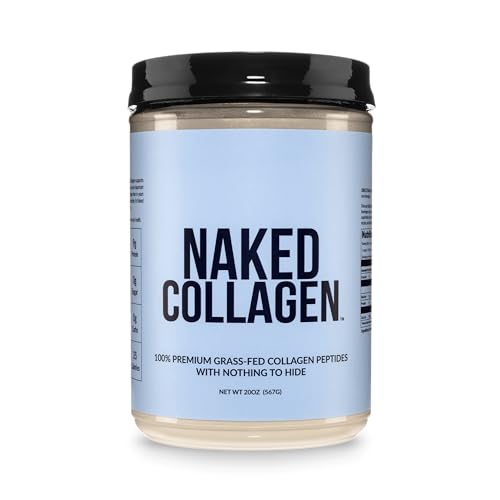
1 ingredientNSF Contents Certified9.5 g per serving
The #1 pick in our guide to the best collagen powder. It lists only hydrolyzed bovine collagen peptides, the most common form in supplements, and carries the NSF Contents Certified mark.
Final Verdict
There are 28 types of collagen, but types I, II and III make up most of the fibrils in skin and cartilage1. In supplements, most powders are hydrolyzed type I (and III) from cowhide or fish, and these were absorbed comparably34. UC-II is a distinct type II product with a trial in knee osteoarthritis5. “Multi collagen” blends with several types haven’t been shown to work better.
If you want a simple collagen powder, consider NAKED Collagen, a single-ingredient bovine collagen powder with the NSF Contents Certified mark. Compare all picks in our guide to the best collagen powder.
Important: This guide is for general information and isn’t medical advice. Talk to your doctor before taking collagen if you have a food allergy, joint disease or take prescription medicine.
Frequently Asked Questions
How many types of collagen are there?
28, numbered I to XXVIII1.
What are the main types of collagen?
Type I and III in skin, type II in cartilage, type IV in basement membranes and type V with type I in tissues like the cornea1.
Is collagen a protein?
What type of collagen is best for skin?
Skin is made mostly of types I and III1. Most collagen powders from cowhide or fish provide these, and we found no trials showing one type works better for skin.
What type of collagen is best for joints?
What is the structure of collagen?
A triple helix of three chains with glycine at every third position and lots of proline and hydroxyproline1.
Are multi collagen supplements better?
We found no trials showing that blends of several collagen types work better than a single type.
Sources & History
References
- The Collagen Family — Cold Spring Harbor Perspectives in Biology, 2011
- Collagen — The Nutrition Source, Harvard T.H. Chan School of Public Health
- IgE Antibody to Fish Gelatin (Type I Collagen) in Patients With Fish Allergy — Journal of Allergy and Clinical Immunology, 2000
- Absorption of Bioactive Peptides Following Collagen Hydrolysate Intake: A Randomized, Double-Blind Crossover Study in Healthy Individuals — Frontiers in Nutrition, 2024
- Efficacy and Tolerability of an Undenatured Type II Collagen Supplement in Modulating Knee Osteoarthritis Symptoms: A Multicenter Randomized, Double-Blind, Placebo-Controlled Study — Nutrition Journal, 2016
- Significant Amounts of Functional Collagen Peptides Can Be Incorporated in the Diet While Maintaining Indispensable Amino Acid Balance — Nutrients, 2019
Update history
- New guide on the types of collagen covering the 28-member collagen family, the main types and where they’re found, collagen structure and fibers, collagen types in supplements (bovine, marine, UC-II, multi collagen) and whether the type matters.